Cohort-Based Courses vs. Self-Paced Courses: Which Should You Build?
Compare cohort-based and self-paced online courses on completion, pricing, workload, scalability, and student experience to choose the right format for you.
If you’re planning an online course, one of your first decisions is format. Will students move through the material together on a set schedule, or will they learn at their own pace whenever they like? Each model affects your pricing, workload, student results, and how the business scales.
Key takeaways
- Cohort courses typically achieve higher completion and command higher prices, but demand more of your time.
- Self-paced courses scale well and sell anytime, but students often don’t finish.
- A hybrid model can capture the strengths of both.
What’s the difference?
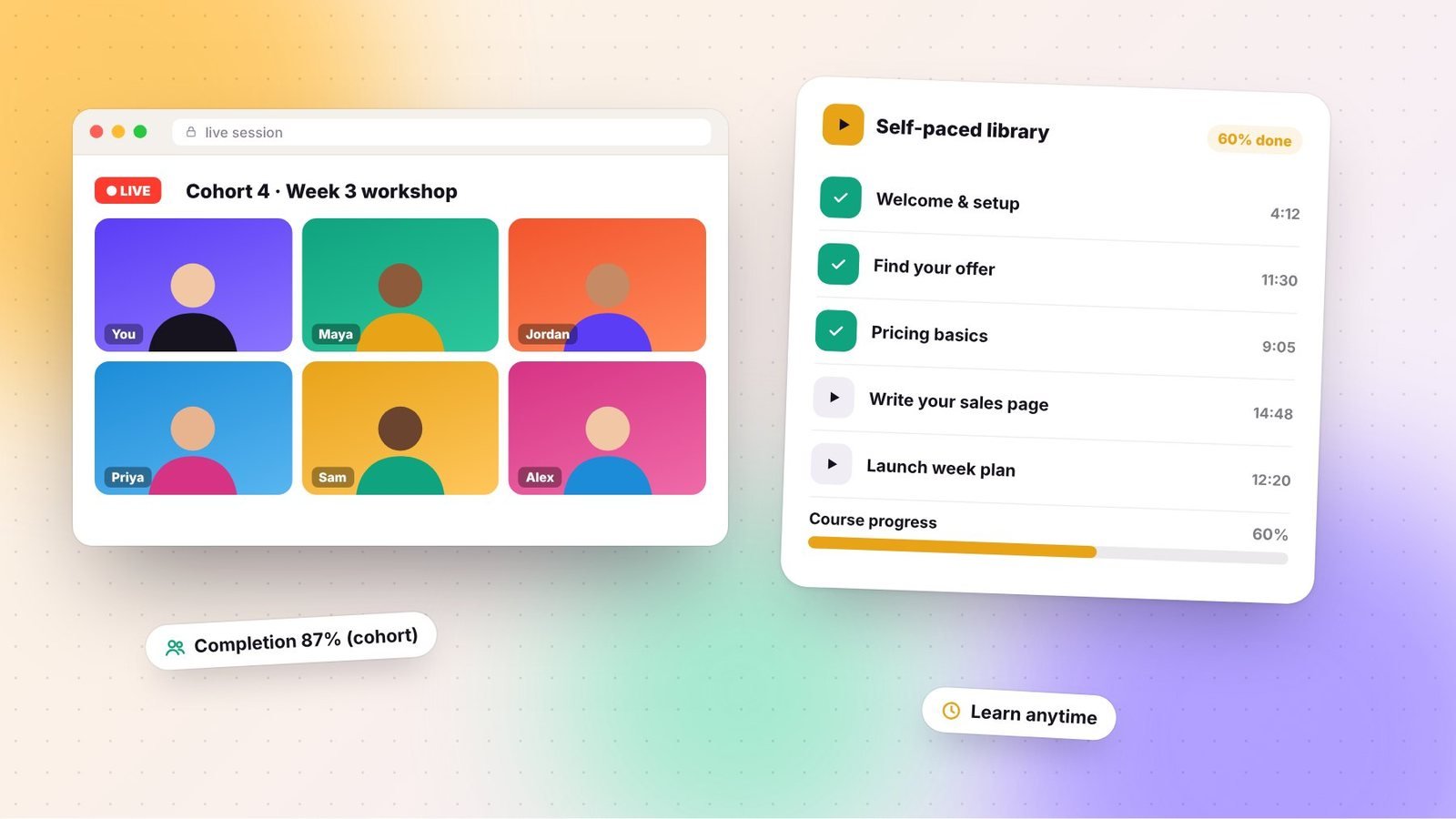
Self-paced courses consist of prerecorded lessons and resources that students can access anytime. They’re usually sold year-round, often with lifetime access.
Cohort-based courses run on a fixed schedule with a group of students who start and finish together. They typically include live sessions, assignments, discussion, and feedback over several weeks.
Side-by-side comparison
| Factor | Self-paced | Cohort-based |
|---|---|---|
| Student completion | Often low | Usually much higher thanks to deadlines and peers |
| Typical price | Lower to mid | Mid to high |
| Your ongoing time | Low after creation | High during each cohort |
| Scalability | High | Limited by live capacity |
| Sales pattern | Evergreen, any day | Launch-driven enrollment windows |
| Feedback loop | Slower | Immediate; you see where students struggle |
| Community | Optional | Built in |
When self-paced makes sense
- Your topic is a clear, teachable skill like software, a technical process, or a creative technique.
- Your audience has unpredictable schedules across time zones.
- You want income that isn’t tied to your calendar.
- You have steady traffic through YouTube, search, or an email list that can sell the course continuously.
To improve completion in self-paced courses, keep lessons short, add checklists and quick wins early, send progress reminder emails, and consider a community or monthly office hours.
When cohorts make sense
- The outcome requires practice and feedback, such as writing, public speaking, design, or business building.
- Accountability is a big part of the value.
- You’re testing a new course idea. Teaching live first lets you refine the curriculum before recording a polished version.
- You enjoy teaching live and can block out the time.
Cohorts also tend to generate strong testimonials because students experience the transformation alongside you.
The hybrid approach
Many successful creators combine both formats:
- Prerecorded core + live support: students watch lessons on their own, then join weekly live Q&As or workshops during a defined cohort period.
- Cohort first, self-paced later: run several live cohorts, then package recordings and materials into a lower-priced self-paced version.
- Self-paced with periodic “sprints”: a self-paced course with optional group challenges a few times a year.
The hybrid model gives students structure without requiring you to teach every lesson live each time.
Pricing implications
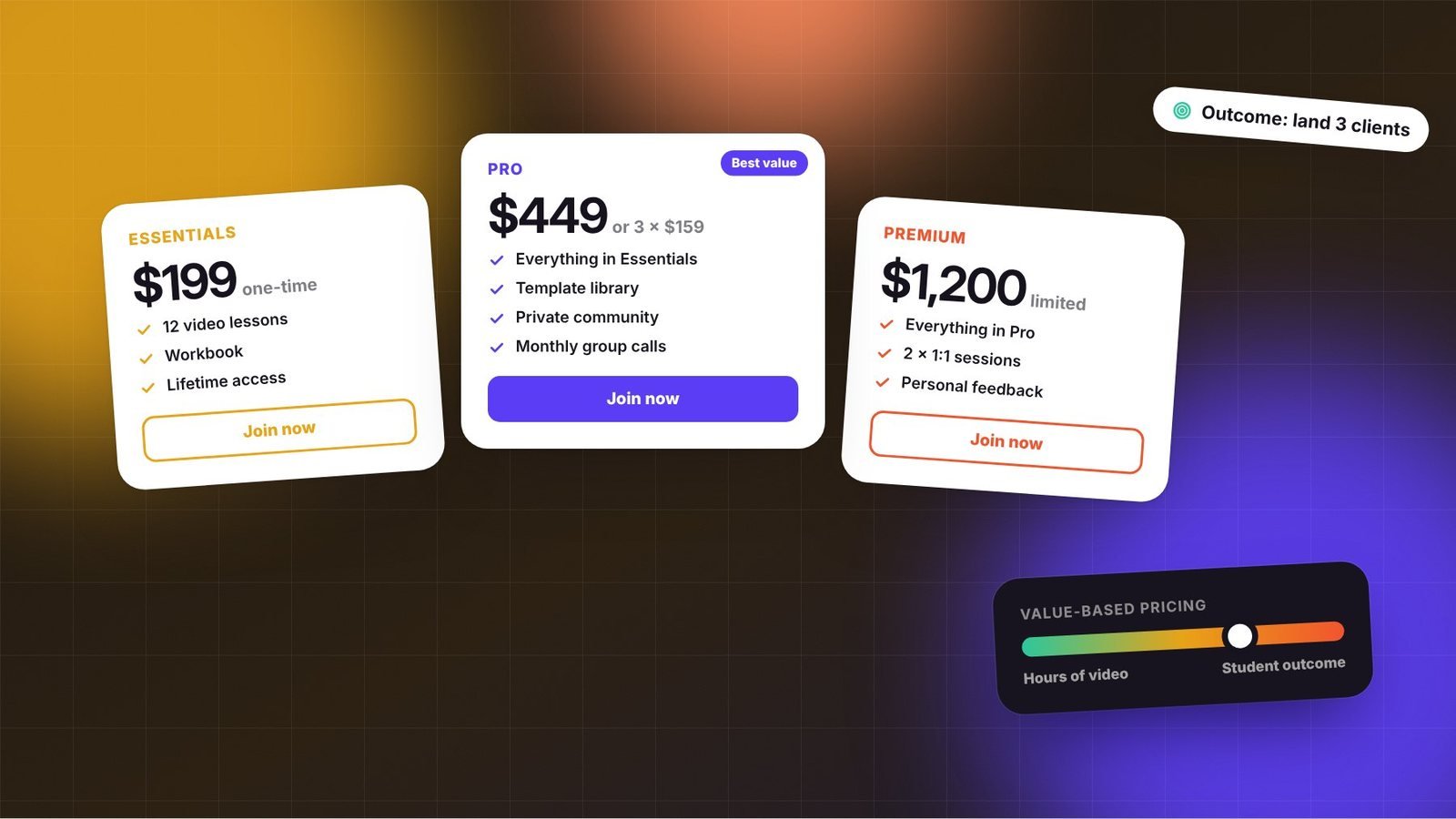
Because cohorts include live access, feedback, and community, they typically command higher prices than self-paced courses on the same topic. Self-paced courses make up for lower prices with volume and evergreen sales. Read our course pricing framework for a step-by-step approach.
Workload reality check
Before choosing, estimate your hours honestly:
- Self-paced: heavy upfront creation (planning, recording, editing, platform setup), then ongoing marketing and occasional updates.
- Cohort: lighter upfront creation, but each run requires live sessions, feedback, community moderation, and student support, plus a launch every time.
How to decide
- Does the outcome need feedback and practice? If yes, lean cohort or hybrid.
- Is your audience big enough to sell continuously? If yes, self-paced can work.
- Have you taught this before? If not, a small live cohort is a low-risk way to start.
- What kind of work energizes you? Your enjoyment affects quality and longevity.
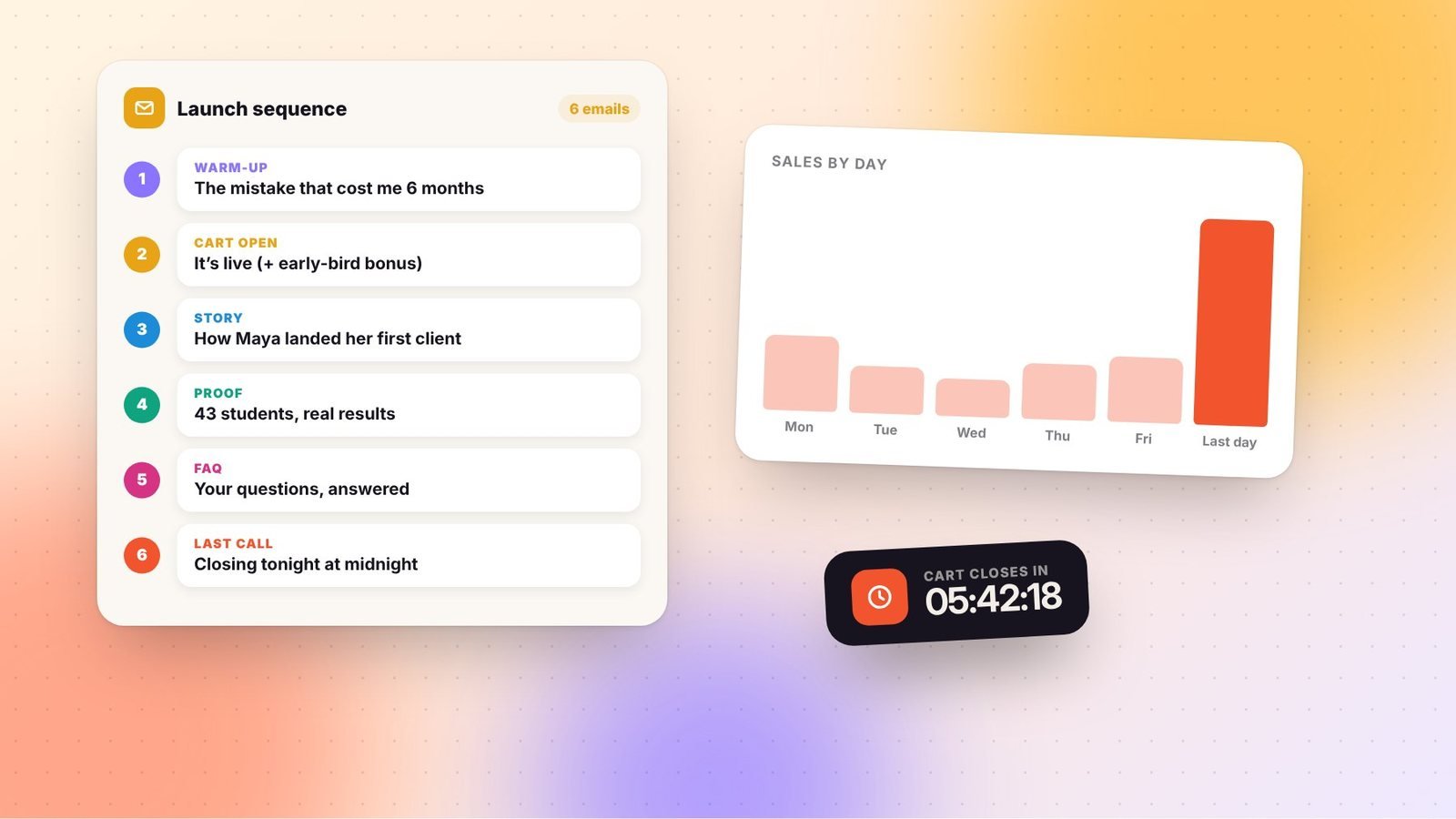
There’s no wrong answer, only the right fit for your topic, audience, and lifestyle. Whichever you choose, plan your launch carefully with our launch email sequence guide.
Frequently asked questions
Can I turn a cohort course into a self-paced course?
Yes. Many creators record their live cohort sessions, refine the material, and package it into a self-paced version. Running live cohorts first is a great way to improve the curriculum before recording.
How many students should a cohort have?
It depends on how much individual attention you provide. Smaller cohorts allow more feedback, while larger cohorts rely more on peer support and teaching assistants. Choose a size that lets you deliver on your promises.
Why do self-paced courses have low completion rates?
Without deadlines or accountability, students often get busy and fall behind. Short lessons, early quick wins, progress emails, and optional live support can significantly improve completion.