How to Start a Newsletter in 2026: Platform, Positioning, and Your First 1,000 Subscribers
A complete beginner's guide to starting a newsletter: choosing a topic and format, picking a platform, writing your first issues, and growing to 1,000 subscribers.
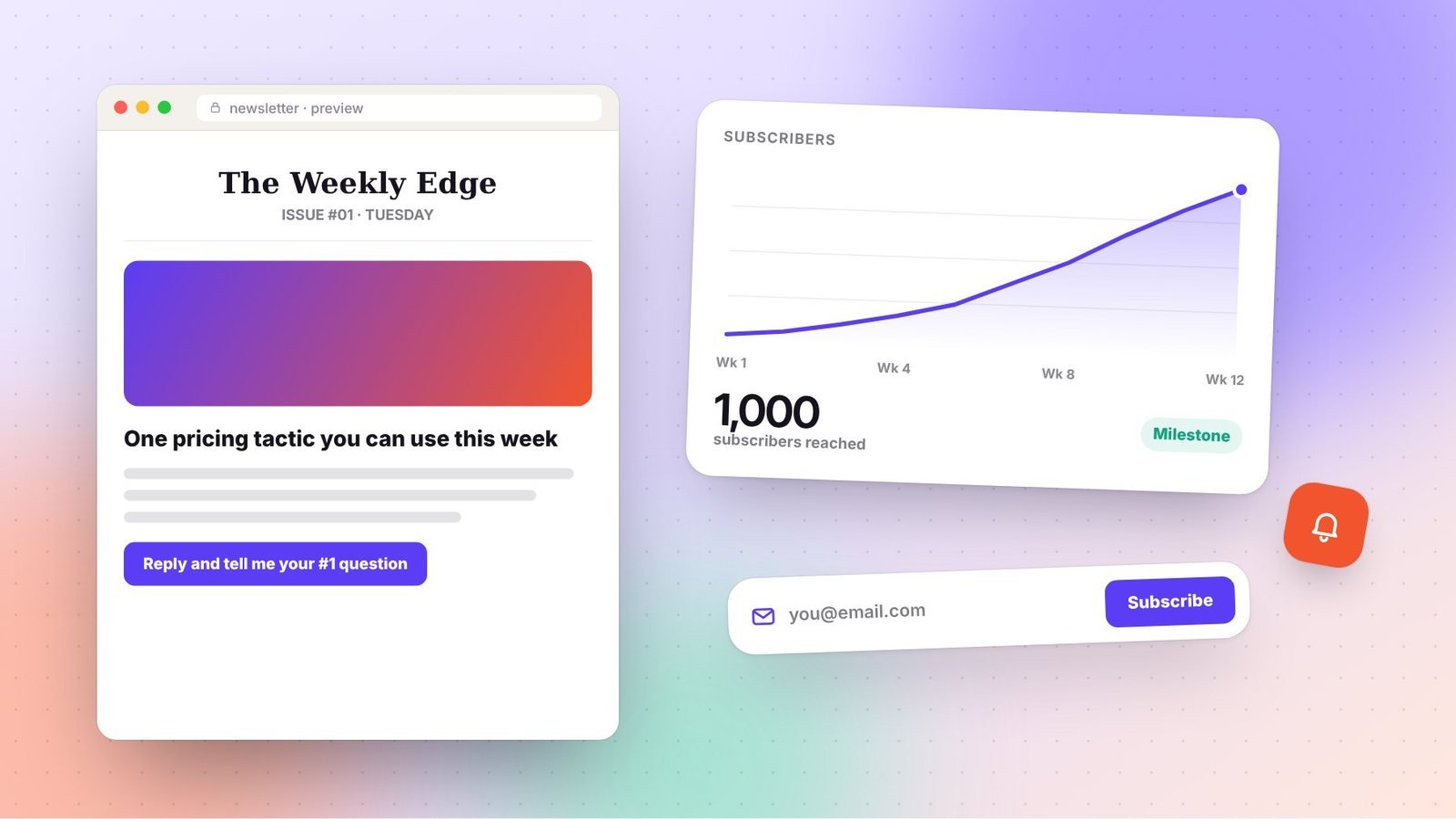
A newsletter is one of the most valuable assets a creator can own. Social platforms decide who sees your posts; an email list lets you reach your audience directly, on your schedule, without fighting an algorithm. Newsletters also convert extremely well for products, sponsorships, and paid subscriptions.
This guide walks through everything you need to launch a newsletter and reach your first 1,000 subscribers.
Key takeaways
- Define a clear promise: who it’s for, what they get, and how often.
- Pick a platform that fits your goals; you can migrate later if you keep your list exportable.
- Growth comes from consistent issues plus active promotion, not from launching and waiting.
Step 1: Define your newsletter’s promise
Readers subscribe to a clear benefit. Write a one-sentence promise in this format: “Every [frequency], [type of reader] gets [specific value].” For example: “Every Tuesday, freelance designers get one pricing or client-management tactic they can use that week.”
Your promise guides everything: your name, your sign-up page, and what you write in each issue. If a reader can’t tell what they’ll get within a few seconds, they won’t subscribe.
Step 2: Choose a format
- Essay: one deep idea per issue. Builds strong loyalty and works well for paid newsletters.
- Curation: the best links, tools, or news in your niche with your commentary. Easier to produce and great for busy readers.
- How-to: one tactic or tutorial per issue. Very practical and highly shareable.
- Hybrid: a short main piece plus a few curated links or a reader question.
Pick a format you can sustain. A shorter, consistent newsletter beats an ambitious one that appears sporadically.
Step 3: Pick a platform
Popular options include Substack, beehiiv, Kit (formerly ConvertKit), Ghost, and MailerLite. Each has different strengths:
- Some focus on built-in discovery and recommendations between newsletters.
- Some excel at automation and selling digital products.
- Some charge a percentage of paid subscription revenue; others charge a monthly fee based on list size.
Read our detailed comparison of Substack, beehiiv, and Kit. Whatever you choose, make sure you can export your subscriber list, and set up a custom domain for sending when possible, which improves deliverability.
Step 4: Set up the essentials
- A sign-up page with your promise, a few bullet points of what readers get, and a sample issue or testimonial.
- A welcome email that thanks new subscribers, restates the promise, and asks them to reply with one question. Replies help deliverability and teach you about readers.
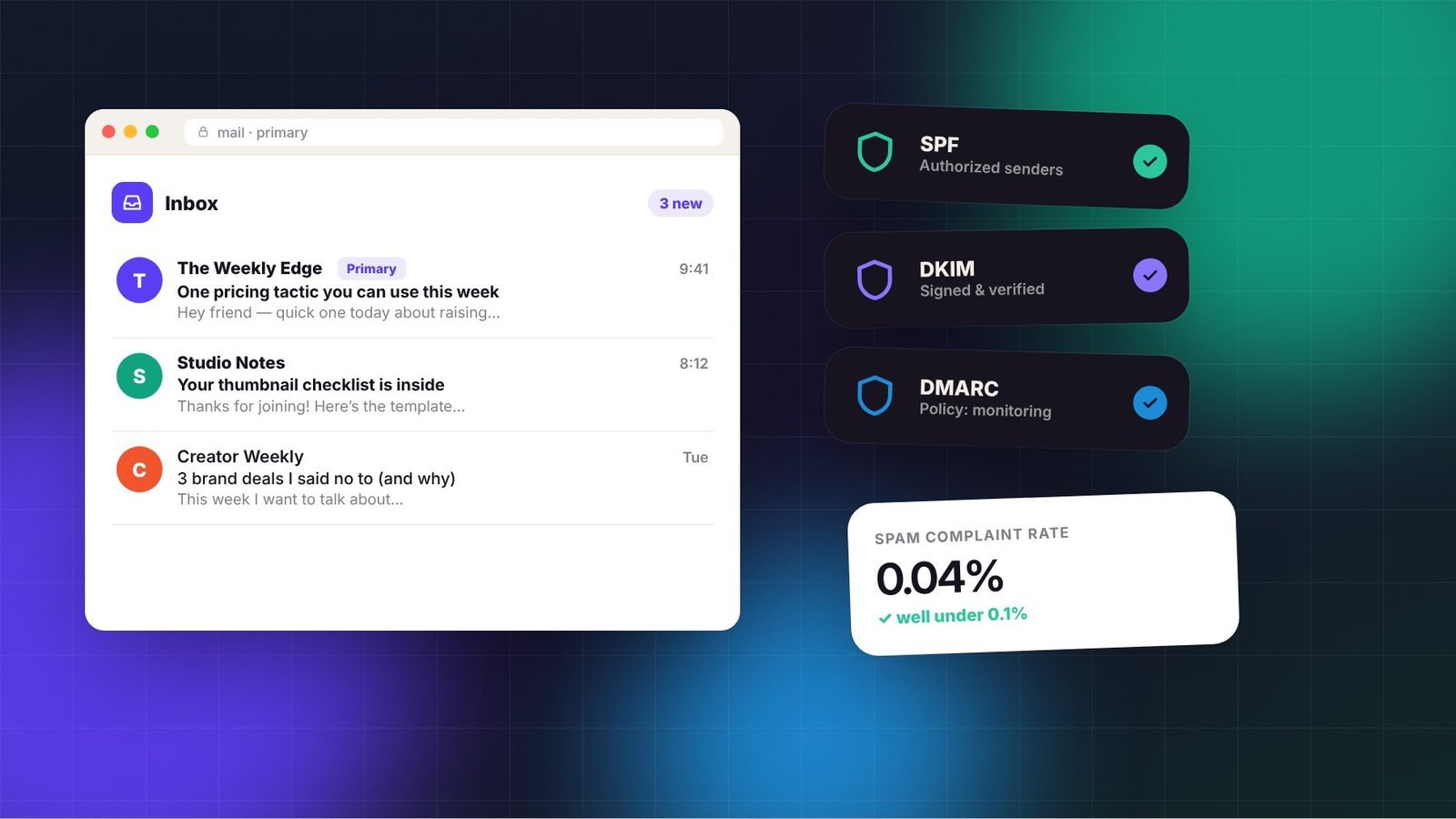
- Email authentication (SPF, DKIM, DMARC) on your sending domain. See our email deliverability guide.
- A legal footer: US anti-spam law (the CAN-SPAM Act) requires a valid physical postal address and a clear way to unsubscribe in commercial email. Many creators use a P.O. box or virtual mailbox for privacy.
Step 5: Write your first issues
Write three issues before you launch. That gives you a buffer and helps you find your voice. A simple structure for each issue:
- A subject line that states the benefit or sparks curiosity.
- A short, personal opening line.
- The main value: the idea, lesson, or curated picks.
- A single clear call to action, such as reply, share, or check out a resource.
Step 6: Get your first 100 subscribers
Your first subscribers will come from people who already know you:
- Announce it across your social channels with a clear reason to subscribe.
- Personally invite friends, colleagues, and past clients who fit your audience.
- Add a sign-up link to your bio, email signature, website, and video descriptions.
Step 7: Grow from 100 to 1,000
This stage requires consistent promotion. Tactics that work for many creators:
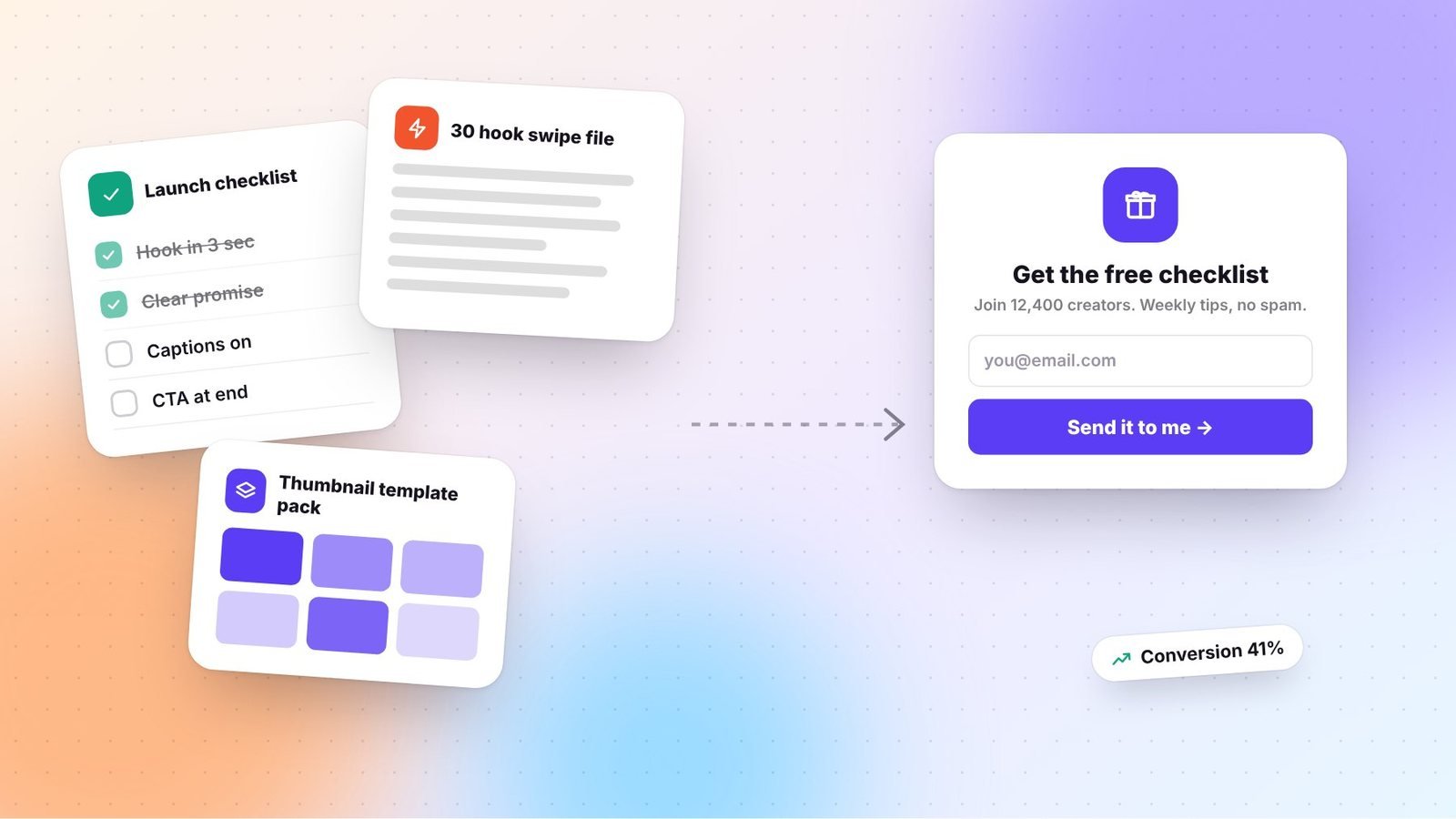
- Offer a lead magnet, such as a template, checklist, or mini-course that solves one problem. See 15 lead magnet ideas.
- Post newsletter excerpts on social platforms with a link to subscribe for the full issue.
- Use referral programs that reward subscribers for sharing.
- Cross-promote with newsletters of similar size in adjacent niches.
- Write guest posts or appear on podcasts where your ideal readers already gather.
- Mention it in every piece of content. One sentence at the end of each video or post adds up.
Step 8: Measure what matters
Track subscriber growth, click rate, and replies. Open rates have become less reliable because some email apps load images automatically, so treat them as a rough directional signal. Unsubscribes are normal; a few after each issue simply means your list is self-selecting the right readers.
Stay consistent
The newsletters that win are usually the ones that keep showing up. Pick a schedule you can maintain for a year, whether weekly or every other week, and protect it. Once you have an engaged list, monetization becomes much easier; our guide to making money from a newsletter covers the next step.
Frequently asked questions
How often should I send my newsletter?
Choose a frequency you can maintain for a year. Weekly is common and keeps readers engaged, while every other week works well for in-depth issues. Consistency matters more than frequency.
Do I need a website to start a newsletter?
No. Most newsletter platforms provide a sign-up page and web archive. A website on your own domain becomes more valuable over time for search traffic and credibility, but it isn’t required to launch.
How long does it take to reach 1,000 subscribers?
It varies widely. Creators with an existing audience may get there in weeks, while starting from scratch can take months. Consistent promotion, a strong lead magnet, and collaborations usually speed things up.