How to Make Money From a Newsletter: Sponsorships, Paid Tiers, and Beyond
Explore the main ways to monetize a newsletter, from sponsorships and paid subscriptions to products and affiliates, plus how to price and when to start.
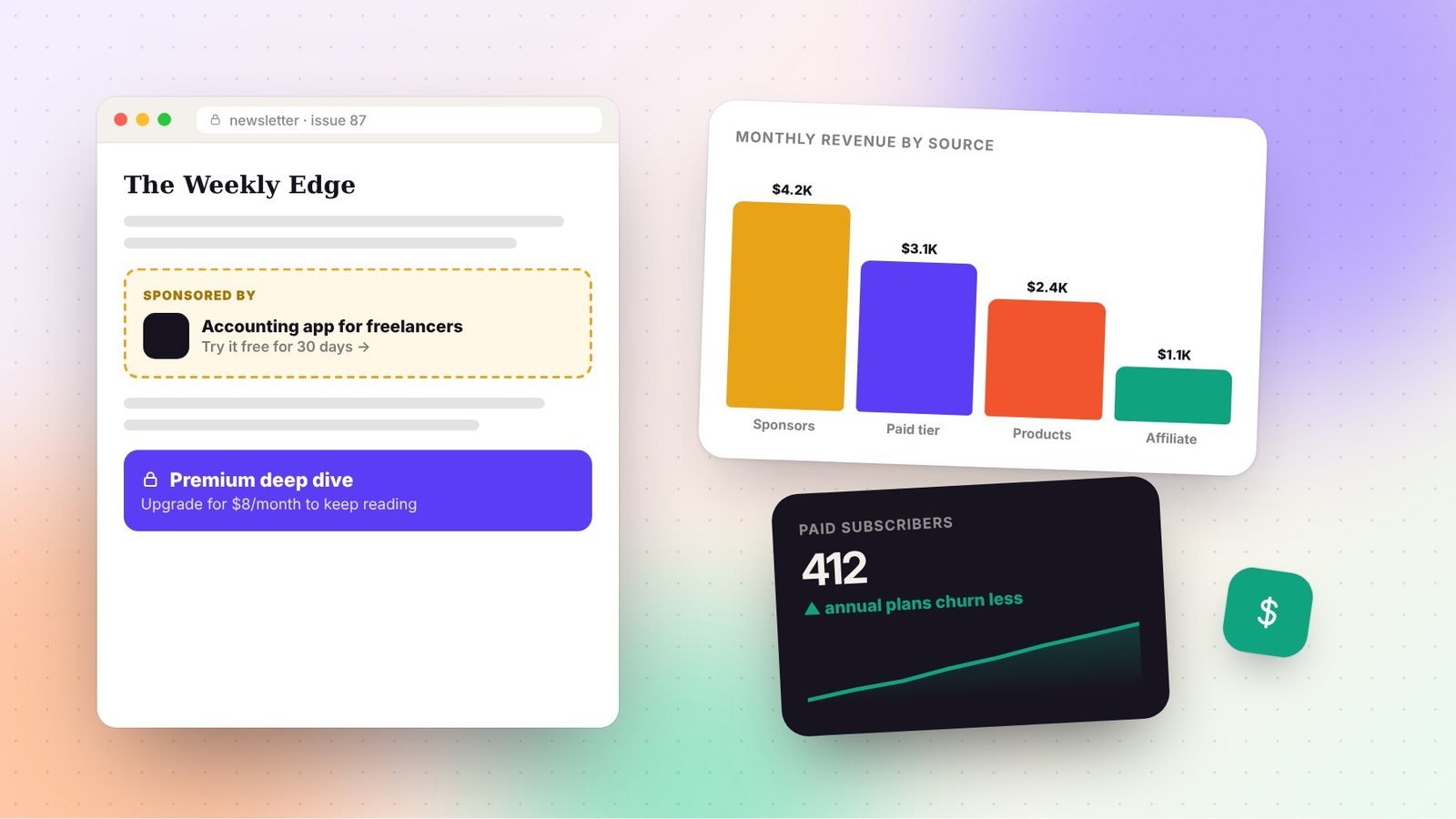
A newsletter can be one of the most profitable assets in a creator business. Email readers tend to be highly engaged, and you control exactly when and how you present offers. But there’s more than one way to earn from a list, and the right mix depends on your audience size, niche, and how much you want to write.
Here are the main ways to monetize a newsletter, when each makes sense, and how to get started.
Key takeaways
- Sponsorships suit newsletters with a well-defined audience that advertisers want to reach.
- Paid subscriptions work when you offer unique analysis, access, or utility readers can’t easily find elsewhere.
- Your own products often generate the most revenue per subscriber.
1. Sponsorships
Brands pay to place a message in your newsletter, usually a short ad block, a dedicated “sponsored by” section, or an entire sponsored issue. Sponsors care about who your readers are, how engaged they are, and how many people click.
How newsletter sponsorships are priced
- Flat rate per placement: the most common approach for creators.
- CPM (cost per thousand subscribers or opens): often used by larger newsletters and ad networks.
- Cost per click: some networks pay per click, which shifts more risk to you.
Rates vary widely by niche. A newsletter for software buyers or finance professionals can often command much higher rates than a general-interest newsletter of the same size, because advertisers sell higher-value products. Package placements, such as four issues for a discounted rate, to make buying easy.
Finding sponsors
- Join a newsletter ad network built into your platform or a third-party marketplace.
- Pitch brands your readers already use and talk about.
- Add a “Sponsor this newsletter” page with audience details and pricing.
Our guides to creating a media kit and pitching brands apply directly to newsletters.
2. Paid subscriptions
Readers pay monthly or yearly for premium content. Common paid models include:
- Freemium: free weekly issue plus paid deep dives, archives, or extra issues.
- Fully paid: all main content is behind the paywall, with occasional free previews.
- Community add-on: paid tier includes a chat, events, or Q&As.
Paid newsletters work best when you provide something readers can’t easily get for free: expert analysis, original research, curated data, or exclusive access. Offer an annual plan at a modest discount; annual subscribers churn less and improve cash flow.
3. Your own products and services
Email is one of the best channels for selling your own offers: courses, templates, coaching, consulting, workshops, or memberships. You keep most of the revenue, and readers who already trust your writing are warm buyers.
Plan launches with a short email sequence instead of a single “buy now” email. Our guide to product launch email sequences walks through a proven structure.
4. Affiliate recommendations
Recommend tools, books, or services you use and earn a commission. Check each program’s terms first, since some prohibit affiliate links in emails. Always disclose affiliate relationships clearly near the link.
5. Paid recommendations and referral programs
Some platforms and networks pay you when readers subscribe to another newsletter you recommend. These can add incremental revenue, but only recommend publications you’d genuinely suggest, since your reputation is on the line.
When should you start monetizing?
There’s no magic number. Many newsletters begin earning from affiliates and their own products within the first few hundred subscribers. Sponsorships often become practical once you can show a consistent, clearly defined audience and solid click rates, even at a few thousand subscribers in a valuable niche. Paid subscriptions work best after you’ve built trust with consistent free issues.
Keep readers happy while you earn
- Keep ads clearly labeled. Readers accept sponsors when they’re honest and relevant.
- Limit ad density. One or two placements per issue is usually plenty.
- Only promote what fits. A poorly matched sponsor hurts trust more than it pays.
- Keep the free product strong. It’s what grows your list.
A sample monetization roadmap
| Stage | Focus |
|---|---|
| 0–500 subscribers | Consistency, affiliate links for tools you use, one small digital product |
| 500–2,500 | Services or coaching, first direct sponsor deals in a focused niche |
| 2,500–10,000 | Regular sponsorships, launch a course or paid tier |
| 10,000+ | Ad network or direct sales packages, premium products, events |
These stages are a rough guide; niche and engagement matter more than raw numbers. Start with the simplest income stream that serves your readers, then build from there.
Frequently asked questions
How much can I charge for a newsletter sponsorship?
Rates depend on niche, audience quality, click rates, and placement. Many newsletters charge a flat fee per placement or price based on CPM. Research rates in your niche and start with packages that are easy for sponsors to buy.
Should my newsletter be free or paid?
Many creators start free to grow their audience, then add a paid tier with extra value. A fully paid newsletter can work if you offer unique analysis or information readers can’t easily find elsewhere.
Can I use sponsorships and a paid tier together?
Yes. Some newsletters run sponsors in the free edition and offer an ad-free or premium paid tier. Just make sure the free version stays valuable enough to keep growing your list.