Substack vs. beehiiv vs. Kit: Which Newsletter Platform Fits You?
Compare Substack, beehiiv, and Kit (formerly ConvertKit) on pricing model, growth tools, monetization, automation, and ownership to choose the right newsletter platform.
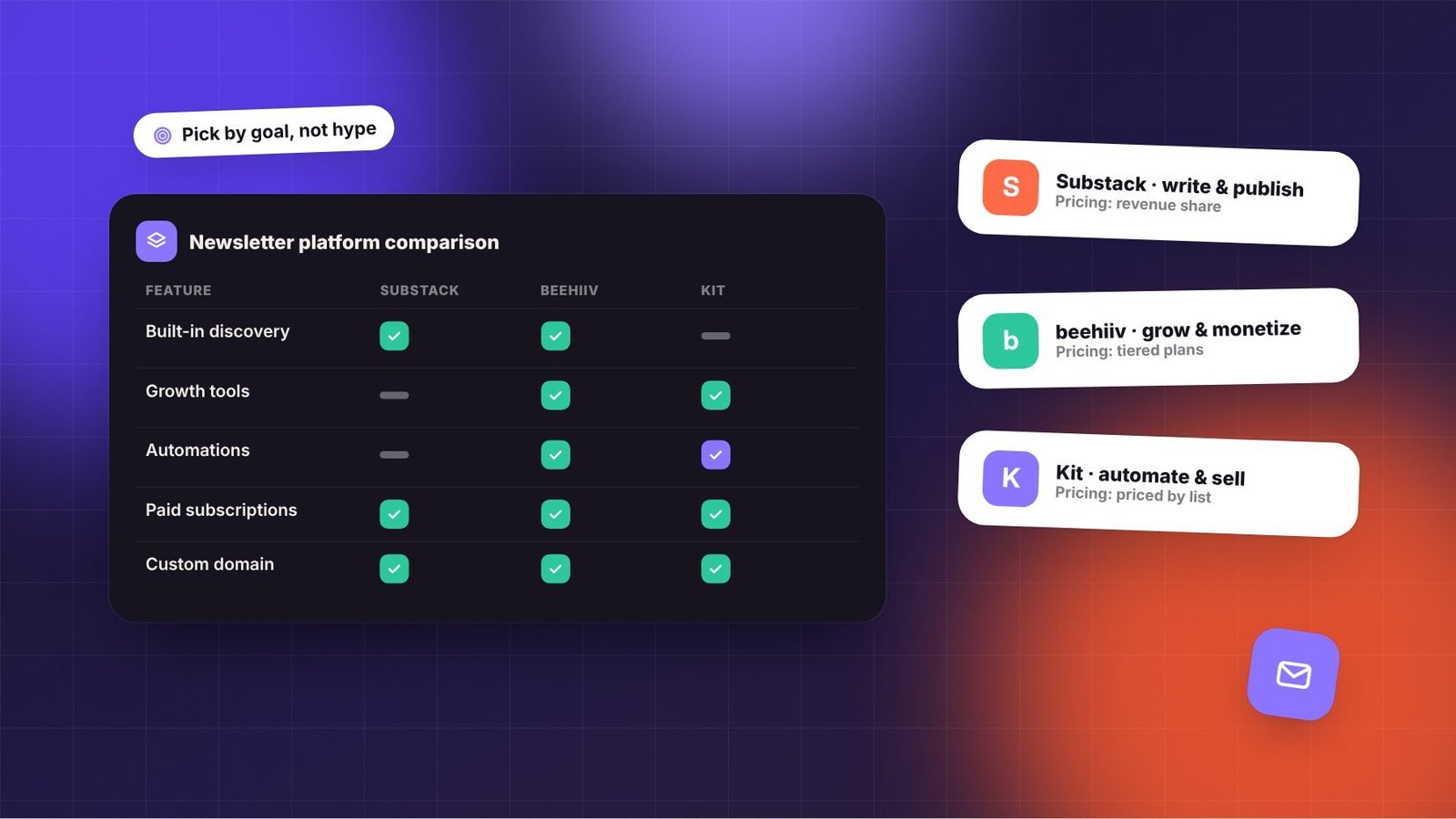
Choosing a newsletter platform can feel like a permanent decision, but it doesn’t have to be. Most platforms let you export your subscribers, and migrations happen all the time. Still, starting on a platform that fits your goals saves effort and money.
Substack, beehiiv, and Kit (the company formerly known as ConvertKit) are three of the most popular choices among creators. Each takes a different approach. Here’s how they compare.
Key takeaways
- Substack is the simplest way to start writing and charge for subscriptions, with a revenue-share pricing model and a built-in reader network.
- beehiiv focuses on growth tools, website features, and ad monetization, with tiered monthly plans.
- Kit is strongest for automation, tagging, and selling digital products, with plans priced by list size.
The quick comparison
| Feature | Substack | beehiiv | Kit |
|---|---|---|---|
| Pricing model | Free to use; takes a percentage of paid subscription revenue plus payment processing | Free starter tier with limits; paid monthly plans unlock more | Free tier with limits; paid plans scale with subscriber count |
| Best for | Writers, essayists, paid newsletters | Media-style newsletters focused on growth and ads | Creators selling products and running automations |
| Built-in discovery | Strong (app, recommendations, network) | Recommendation network and growth tools | Creator recommendations network |
| Paid subscriptions | Yes, core feature | Yes | Yes |
| Automation | Basic | Good, more on higher tiers | Advanced: visual automations, tags, segments |
| Website and design control | Limited | Strong website builder | Landing pages and forms; site builder options |
| Custom domain | Yes | Yes | Yes |
Pricing and features change regularly. Check each platform’s current pricing page before deciding.
Substack: best for writers who want simplicity
Substack’s biggest strength is how little stands between you and publishing. You can set up a publication, write, and turn on paid subscriptions quickly, with no monthly fee. Instead, Substack takes a percentage of paid subscription revenue, and payment processing fees apply on top.
Substack has also built a reader-facing app and network where readers discover new publications through recommendations, Notes, and the app itself. For many writers, that network is a meaningful source of growth.
Trade-offs: limited design customization and automation. And because fees scale with revenue, large paid newsletters may eventually pay more than they would on a flat-fee platform.
beehiiv: best for growth-focused newsletters
beehiiv was built by people with a background in large media newsletters, and its tools reflect that: referral programs, recommendations, detailed analytics, website building, and an ad network that connects newsletters with sponsors.
It uses tiered monthly pricing, with a free starter tier limited by subscriber count and features. Higher plans unlock advanced automations, premium subscriptions, and more growth tools.
Trade-offs: costs rise as you grow and need more features. Some of its best monetization and growth features are reserved for paid plans.
Kit: best for creators selling products
Kit started as an email marketing tool for creators and remains strongest at automation. You can tag subscribers based on what they click or buy, build visual automations, send targeted sequences, and sell digital products and paid newsletters directly.
That makes Kit a natural fit for creators who run launches, sell courses, or segment readers by interest. Its pricing scales with subscriber count, with a free tier for smaller lists.
Trade-offs: it’s less of a publishing destination, with weaker built-in reader discovery than Substack, and costs grow with your list.
How to choose
- Choose Substack if you mostly want to write, plan to offer a paid subscription, and value its reader network more than design or automation.
- Choose beehiiv if you’re building a media-style newsletter, want strong growth tools and a website, and plan to earn from sponsorships or ads.
- Choose Kit if you sell products, courses, or services and want to send different emails to different segments automatically.
Compare total cost, not just sticker price
Estimate what each platform would cost at your expected size in 12 months. Include monthly plan fees, revenue share, and payment processing fees. A revenue-share model is often cheapest when you’re small; a flat-fee model can become cheaper as paid revenue grows.
Protect yourself whichever you pick
- Use a custom domain so links and branding move with you.
- Export your subscriber list regularly as a backup.
- Keep paid subscribers informed before any migration; moving payment subscriptions can require extra steps through your payment processor.
The best platform is the one you’ll actually use consistently. Pick one, publish your first issues, and revisit the decision once you have real data. If you haven’t launched yet, start with our guide on how to start a newsletter.
Frequently asked questions
Can I switch newsletter platforms later?
Yes. Most platforms let you export your subscriber list and import it elsewhere. Moving paid subscriptions can take extra steps, so plan migrations carefully and tell readers what to expect.
Which platform is best for beginners?
Substack is often the simplest to start with because there’s no monthly fee and setup is fast. beehiiv and Kit also offer free tiers and may suit beginners who want more growth or automation features from the start.
Do I need a custom domain?
It isn’t required, but it’s recommended. A custom domain strengthens your brand, improves email deliverability when used for sending, and makes future migrations easier because your links stay the same.