How Much to Charge for Sponsored Content: A Creator Pricing Guide
Learn how to price sponsored posts and videos using views, engagement, deliverables, usage rights, and exclusivity, with a simple formula and negotiation tips.
Pricing sponsored content is one of the most stressful parts of being a creator. Quote too high and the brand disappears. Quote too low and you leave money on the table, undervalue your work, and make it harder to raise rates later. There’s no universal price list, but there is a logical way to build a quote.
Key takeaways
- Base your rate on expected views and engagement, adjusted for niche and format.
- Charge separately for usage rights, exclusivity, whitelisting, and extra revisions.
- Package deals and long-term partnerships benefit both you and the brand.
Start with a base rate
A common starting point is a CPM-style approach: estimate how many people will see the content and charge per thousand views. Use your average views on that platform over the last 30–90 days, not your follower count.
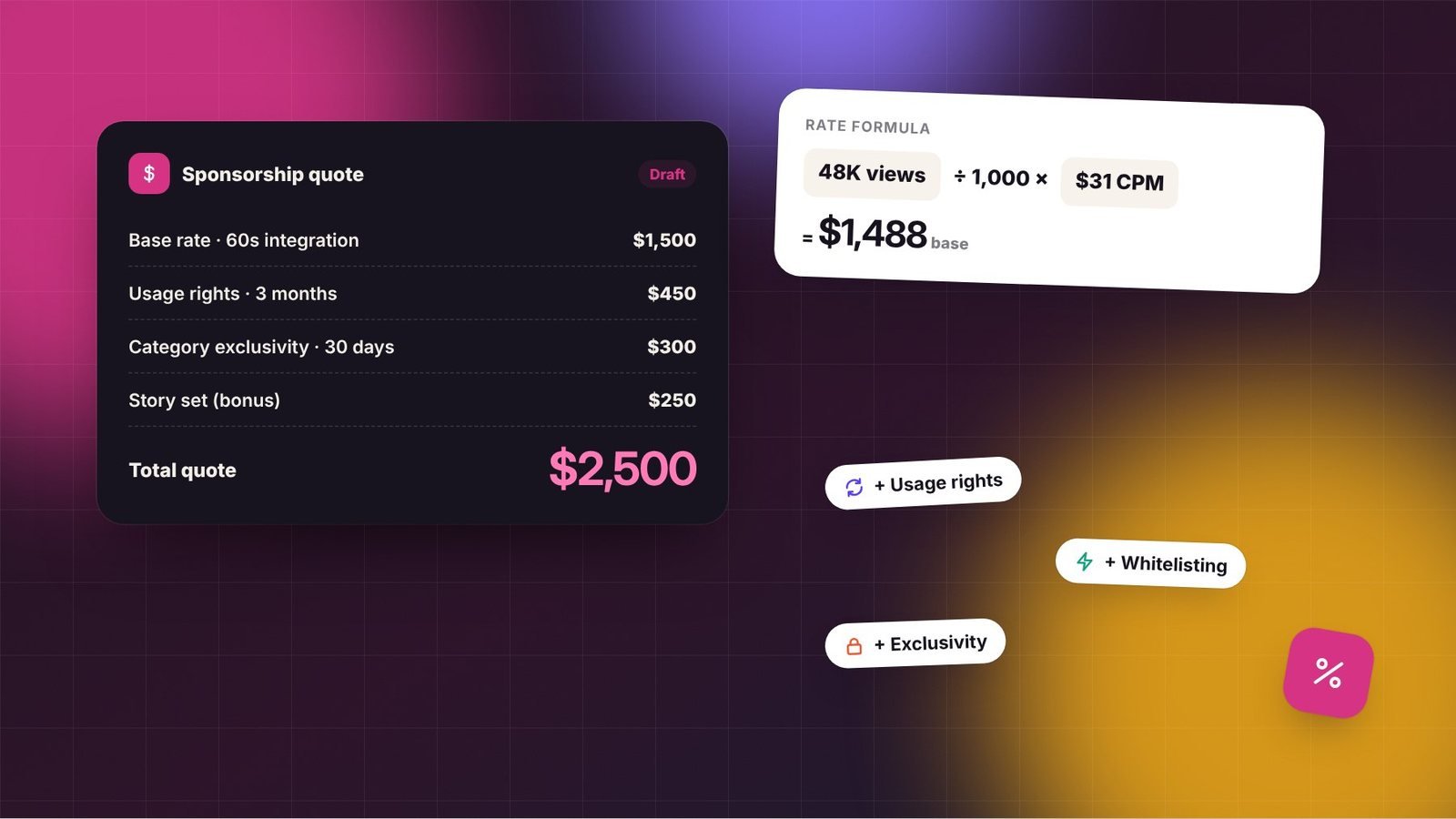
Base rate = (average views ÷ 1,000) × your CPM rate
CPM rates for sponsored content vary widely by platform, niche, and format. Dedicated YouTube videos generally command higher rates than short integrations, and finance, B2B software, and technology niches often earn more than broad entertainment because advertisers sell higher-value products. Research what creators in your niche charge by talking with peers and checking creator pricing reports, which several influencer marketing companies publish each year.
Adjust for engagement and audience quality
Two creators with the same views aren’t equally valuable if one has a highly engaged, specific audience. Consider increasing your rate if:
- Your engagement rate is well above your niche’s average.
- Your audience closely matches the brand’s ideal customer.
- You have proof of strong past results, such as clicks, conversions, or sold-out codes.
- Your audience is concentrated in high-value markets the brand targets.
Price each deliverable
| Deliverable | Relative value |
|---|---|
| Dedicated YouTube video | Highest |
| YouTube integration (60–90 seconds) | High |
| TikTok, Reel, or Short | Medium |
| Newsletter sponsorship | Medium–High in valuable niches |
| Instagram Story set | Lower, but often bundled |
| Podcast host-read ad | Medium–High |
Charge for the extras
This is where many creators lose money. Brands often ask for more than just a post. Each of these adds value for the brand and should add cost:
- Usage rights: permission for the brand to reuse your content on its own channels, website, or ads. Charge more for longer periods and paid advertising use. Many creators add a percentage of the base rate per month of usage.
- Whitelisting or Spark Ads: the brand runs paid ads through your account. This is valuable and should be priced accordingly, often monthly.
- Exclusivity: agreeing not to work with competitors for a period. You’re giving up potential income, so charge for it, and keep the scope narrow and the duration short.
- Extra revisions: include one round, then charge for more.
- Rush timelines: fast turnaround disrupts your schedule; add a rush fee.
- Raw footage: unedited files have value for brands making their own edits.
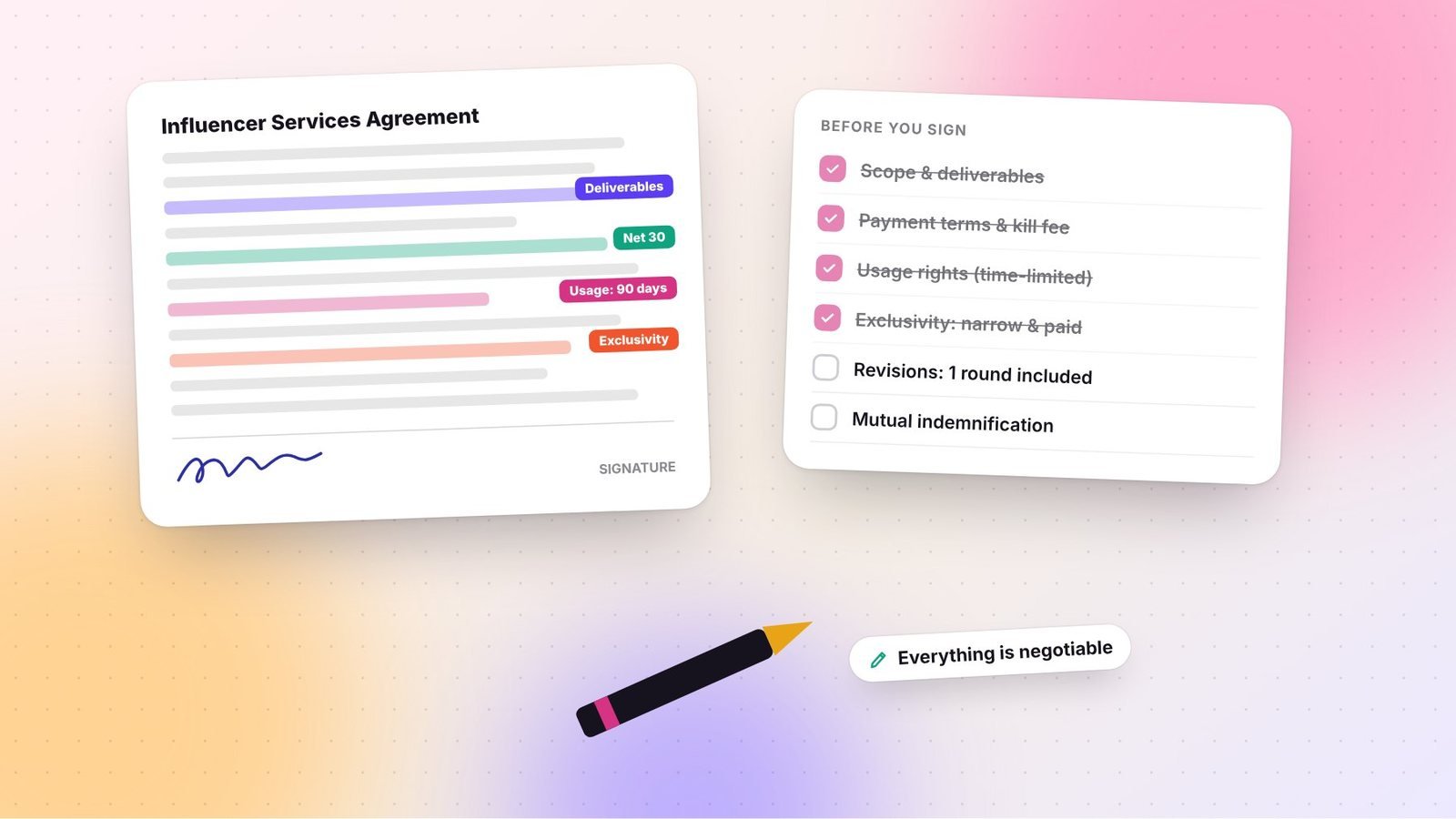
Get every extra in writing. Our guide to brand deal contract clauses explains what to look for.
A sample quote
Here’s an illustrative example for a YouTube integration. Numbers are hypothetical.
| Item | Price |
|---|---|
| Base rate (60-second integration) | $1,500 |
| Organic usage rights, 3 months | $450 |
| Category exclusivity, 30 days | $300 |
| Instagram Story set (bonus deliverable) | $250 |
| Total | $2,500 |
Negotiation tips
- Ask for their budget first. “Do you have a budget in mind for this campaign?” can save you from underquoting.
- Adjust scope, not just price. If the budget is lower, remove deliverables or usage rights rather than simply cutting your rate.
- Offer packages. A three-video package at a modest discount gives the brand better results through repetition and gives you predictable income.
- Be wary of “exposure.” Product-only deals can make sense for products you love, but don’t let them become the norm.
- Get paid terms clear. Net 30 is common; ask for a deposit on larger deals.
When to raise your rates
Raise rates when your average views grow, when you’re booked out consistently, when brands accept your first quote without negotiation, or after a campaign with strong documented results. Many creators review their rates every quarter.
Pricing gets easier with each deal. Build a simple rate card, track what brands accept, and adjust as your audience and results grow. For the next step, learn how to pitch brands.
Frequently asked questions
Should I charge based on followers or views?
Average views are usually a better basis than followers, because they reflect how many people actually see your content. Engagement, audience fit, and past results should also influence your rate.
What should I do if a brand’s budget is too low?
Instead of lowering your rate, adjust the scope. Offer fewer deliverables, remove usage rights, or suggest a shorter integration. If the deal still doesn’t make sense, it’s fine to decline politely.
Should I accept free products instead of payment?
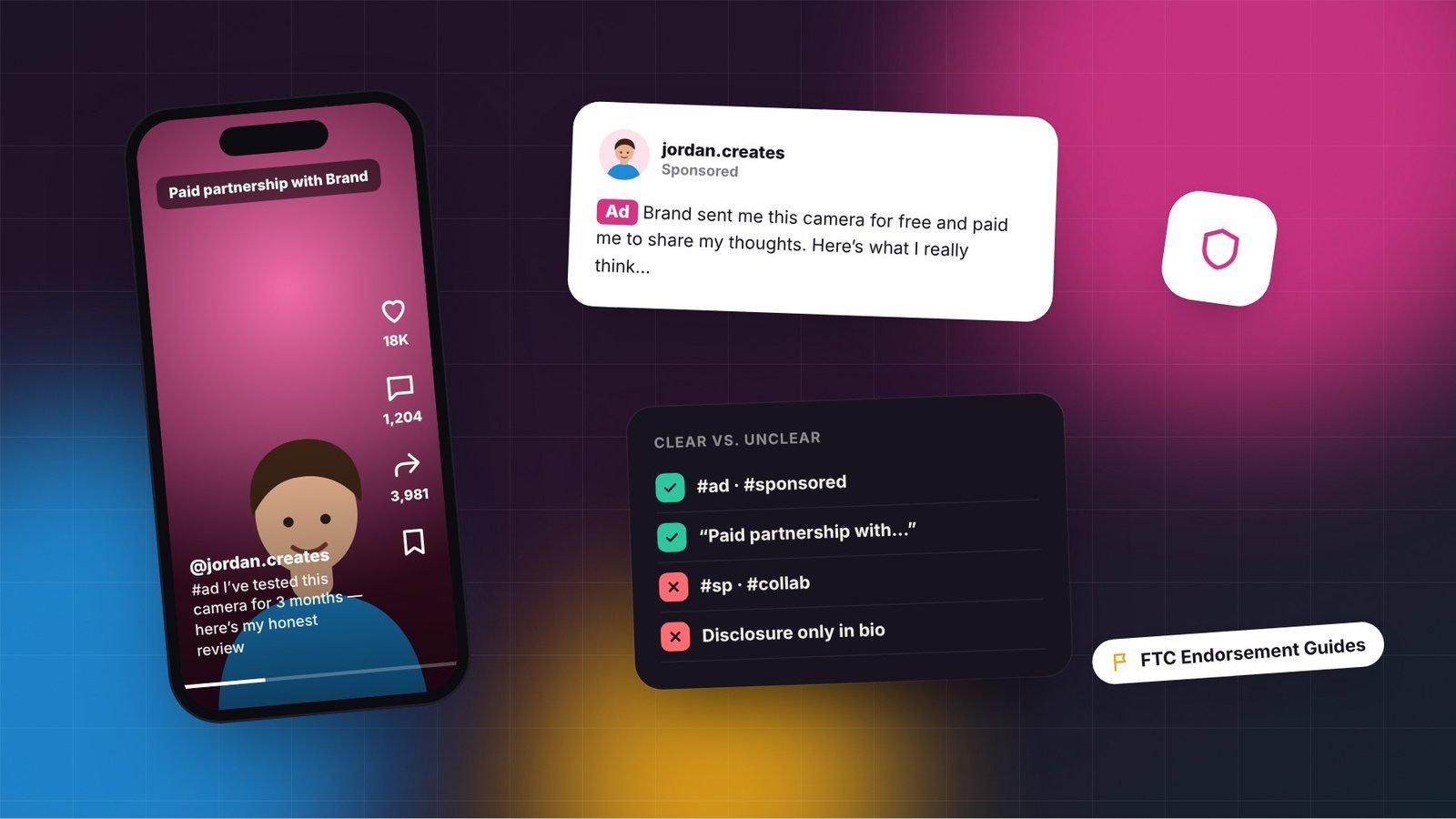
Product-only deals can make sense occasionally for products you genuinely want and would feature anyway. Treat them as exceptions, and remember that free products still require proper disclosure.