FTC Disclosure Rules for Influencers: What US Creators Must Know
A plain-English guide to FTC endorsement disclosure rules for creators: when to disclose, what wording to use, and how to disclose on video, social posts, and newsletters.
If you’re paid, receive free products, or have any other relationship with a brand you mention, US law expects you to tell your audience. The Federal Trade Commission (FTC) enforces truth-in-advertising rules, and its Endorsement Guides explain how they apply to creators. Clear disclosures protect your audience, keep brands comfortable working with you, and protect you from legal trouble.
This guide is educational and not legal advice. For specific situations, consult an attorney and review the FTC’s own resources, including “Disclosures 101 for Social Media Influencers.”
Key takeaways
- Disclose any “material connection”: payment, free products, discounts, affiliate commissions, family or employment ties.
- Make disclosures clear and conspicuous, and place them where people will see them.
- Platform disclosure tools help, but you’re still responsible for a clear disclosure.
What counts as a material connection?
A material connection is any relationship that could affect how your audience views your endorsement. Examples include:
- Being paid to post or mention a product
- Receiving free or discounted products, even if you weren’t asked to post
- Earning affiliate commissions
- Free trips, event tickets, or perks
- Being an employee, investor, or brand ambassador
- Family or personal relationships with the brand
If you’re unsure, disclose. It almost never hurts.
What “clear and conspicuous” means
- Hard to miss: the disclosure should be unavoidable, not buried in a sea of hashtags or hidden behind a “more” link.
- Placed with the endorsement: put it in the content itself, near the claim, not only on your profile or an “about” page.
- Simple language: use words people understand.
- Same format as the endorsement: if you endorse in a video, disclose in the video; if you endorse in audio, say it out loud.
Wording that works
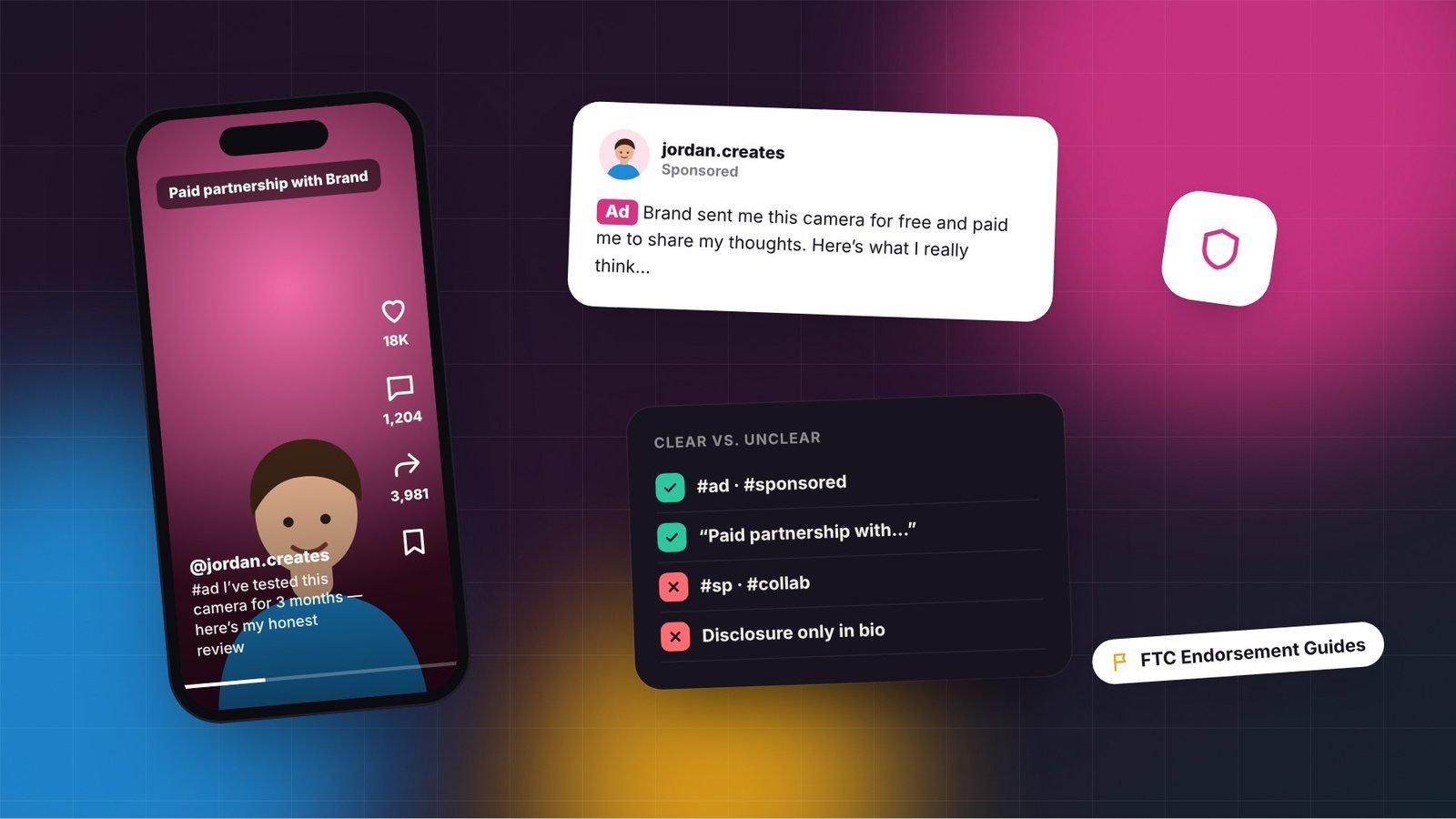
| Clear | Unclear or insufficient |
|---|---|
| “Ad” or “#ad” | “#sp” or “#spon” |
| “Sponsored” or “#sponsored” | “#collab” or “#partner” alone |
| “Paid partnership with [Brand]” | “Thanks [Brand]” alone |
| “[Brand] sent me this for free” | A disclosure only in your bio |
| “I earn a commission from these links” | “Affiliate” buried at the bottom of a long description |
Platform-by-platform tips
Video (YouTube, TikTok, Reels, Shorts)
- Say the disclosure out loud and show it on screen near the start or when you first mention the brand.
- For long videos, repeat it if the endorsement comes up again.
- Use the platform’s paid promotion or branded content setting as well.
- Add it to the description too, near the top.
Image and text posts
- Put “Ad” or “Sponsored” at the beginning of the caption so it appears before the “more” cutoff.
- Superimpose disclosures on images in Stories, with enough time and contrast to read.
Livestreams
- Disclose periodically, since viewers join at different times.
Newsletters, blogs, and podcasts
- Label sponsored sections clearly (“Sponsored by…”).
- Place affiliate disclosures near links, not only at the bottom.
- In podcasts, say it out loud before or during the endorsement.
Honest endorsements matter too
Disclosure isn’t the only rule. Endorsements must reflect your honest opinion and real experience:
- Don’t talk about your experience with a product you haven’t used.
- Don’t make claims a brand couldn’t legally make itself, such as unproven health claims.
- If a brand gives you talking points, make sure they’re true and that you agree with them.
The FTC has also finalized a rule against fake reviews and testimonials, which prohibits things like buying or selling fake reviews and buying fake social media indicators such as followers or views for commercial purposes.
What about brands’ responsibilities?
Brands are also responsible for monitoring their creators’ disclosures and claims. That’s why many contracts include disclosure requirements and approval rights. Our guide to brand deal contract clauses covers what to look for.
Quick disclosure checklist
- ☐ Do I have any material connection to this brand?
- ☐ Is the disclosure in the content itself, not just my profile?
- ☐ Will people see or hear it before they act or scroll away?
- ☐ Is the language simple and clear?
- ☐ Did I use the platform’s branded content tool as well?
- ☐ Are my claims truthful and based on real experience?
Transparent disclosure builds trust. Audiences generally don’t mind creators earning money; they mind feeling misled. For affiliate-specific advice, read our affiliate marketing guide.
Frequently asked questions
Do I need to disclose free products I wasn’t asked to post about?
Generally yes. If a brand sent you a free product and you post about it, that’s a material connection your audience should know about. A simple “Brand sent me this for free” works.
Are the platform branded content tools enough?
Use them, but don’t rely on them alone. The FTC expects disclosures to be clear and hard to miss, so add your own clear wording in the content and caption as well.
Do these rules apply to creators outside the US?
The FTC’s rules apply to endorsements that affect US consumers, so creators abroad who reach US audiences should follow them too. Other countries have their own advertising disclosure rules as well.