Affiliate Marketing for Creators: A Step-by-Step Guide That Respects Your Audience
Learn how creators earn affiliate income ethically: choosing programs, placing links, tracking results, and following FTC disclosure rules in the US.
Affiliate marketing is often the first income stream creators add, and for good reason. You don’t need to create a product, handle customer support, or reach a big audience. You recommend tools and products you already use, and when someone buys through your link, you earn a commission.
The catch is trust. Push too many products, or products you don’t believe in, and your audience notices. Here’s how to build affiliate income that strengthens your reputation instead of spending it.
Key takeaways
- Only promote products you’ve used or thoroughly evaluated.
- Clear, conspicuous disclosure is required by the FTC in the US.
- Helpful content, such as tutorials, comparisons, and resource pages, converts better than random links.
How affiliate marketing works
When you join an affiliate program, you get a unique tracking link. If someone clicks it and makes a qualifying purchase within the program’s cookie window, which may range from one day to 90 days or more, you earn a commission. Commissions vary widely: retail programs often pay a small percentage, while software and digital products may pay much larger percentages or recurring commissions for as long as the customer stays subscribed.
Step 1: Make a list of what you already use
The best affiliate products are already part of your work or life. Write down your camera gear, software, apps, books, courses, and everyday products your audience asks about. If people regularly ask “What mic do you use?” or “How do you make your thumbnails?”, you have built-in demand.
Step 2: Find the right programs
- Direct brand programs: many software companies run their own affiliate or partner programs, often with the best rates. Check the website footer for “Affiliates” or “Partners.”
- Affiliate networks: networks such as Impact, CJ, ShareASale/Awin, and Rakuten connect you to many brands through one dashboard.
- Retail programs: Amazon Associates and other retailer programs cover a huge range of products, though commission rates are usually lower.
- Platform shops: social platforms increasingly offer in-app affiliate tools that let you tag products in videos.
Read each program’s terms. Some prohibit using links in emails, paid ads, or certain wording. Breaking terms can mean losing commissions.
Step 3: Create content that helps people decide
Affiliate links work best inside content that helps someone make a choice:
- Tutorials that use the product to accomplish something.
- Honest reviews after real use, including downsides.
- Comparisons of two or three options for different needs and budgets.
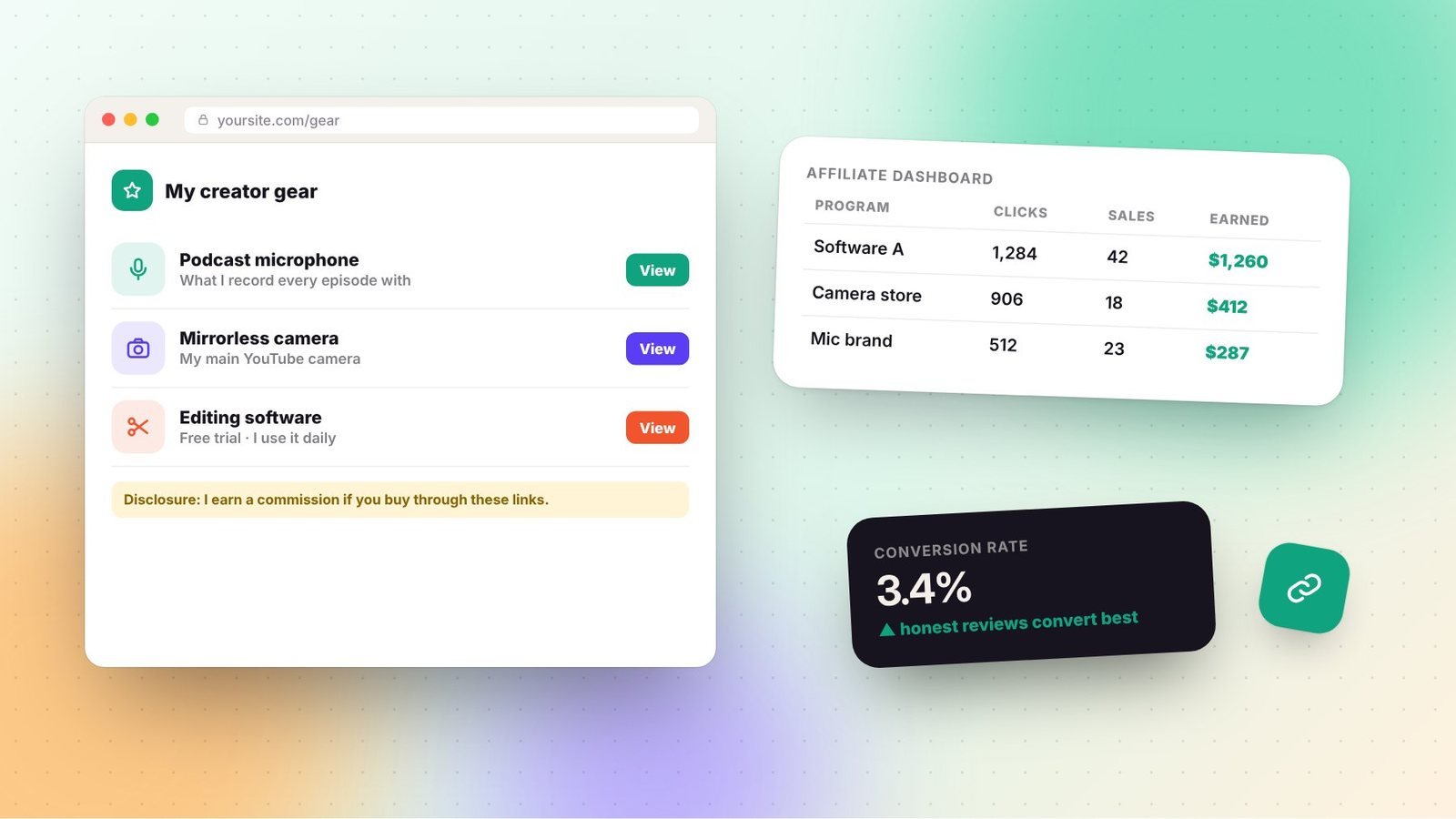
- Resource or “gear” pages listing everything you use, which you can link from your bio and video descriptions.
- Problem-solving roundups, such as “The tools I use to edit videos twice as fast.”
Including non-affiliate or free alternatives, when they’re a better fit, actually increases trust and often conversions.
Step 4: Disclose clearly (it’s the law)
In the United States, the Federal Trade Commission requires that you disclose material connections, including affiliate commissions, clearly and conspicuously. Key principles:
- Place disclosures where people will see them before they click, not buried at the bottom or behind a “more” button.
- Use plain language such as “I earn a commission if you buy through these links.”
- In videos, say it out loud and show it on screen when you mention the product.
- A disclosure on your profile or a separate disclosures page alone isn’t enough.
Read our full guide to FTC disclosure rules for creators for platform-specific examples.
Step 5: Place links where they’re useful
Put links in descriptions, pinned comments, newsletters (if the program allows), blog posts, and your link-in-bio page. Mention them naturally in your content: “The mic I’m using is linked below.” Avoid stuffing a description with dozens of links; a short, organized list is easier to scan.
Step 6: Track and improve
Use each program’s dashboard to see clicks, conversions, and earnings. Look for patterns:
- Which pieces of content drive the most clicks?
- Which products convert best? High clicks with low sales may mean a mismatch between your audience and the product.
- Are evergreen tutorials earning month after month? Update them to keep them accurate.
A link shortener or link-in-bio tool with analytics can help you see where clicks come from across platforms.
Common affiliate mistakes
- Promoting what pays most instead of what’s best. Your audience will eventually notice.
- Hiding disclosures. It’s a legal risk and a trust risk.
- Letting links rot. Products get discontinued and programs close. Audit your top links every few months.
- Relying on one program. Retail programs can change commission rates with little notice.
Affiliate marketing done well feels like a service: you save your audience time and money, and they’re happy to support you through your links. Combine it with other income sources from our ranked list of creator revenue streams for a more stable business.
Frequently asked questions
Do I need a website to do affiliate marketing?
Not always. Many creators share affiliate links in video descriptions, newsletters, and link-in-bio pages. A website helps, though, because helpful articles and resource pages can earn commissions from search traffic for years.
How much can creators earn from affiliate links?
Earnings vary widely based on niche, audience trust, product price, and commission rates. Software and digital products with recurring commissions can be especially valuable. Focus on helpful content and genuine recommendations rather than chasing the highest rates.
Is a disclosure on my profile enough?
No. The FTC expects disclosures to appear with the endorsement itself, where people will see them before clicking or buying. A profile or separate disclosure page can supplement, but not replace, clear disclosures near your links and in your content.