12 Creator Revenue Streams Ranked by Effort and Income Potential
From ad revenue to digital products, compare 12 creator income streams by startup effort, audience size needed, and income potential to build a diversified business.
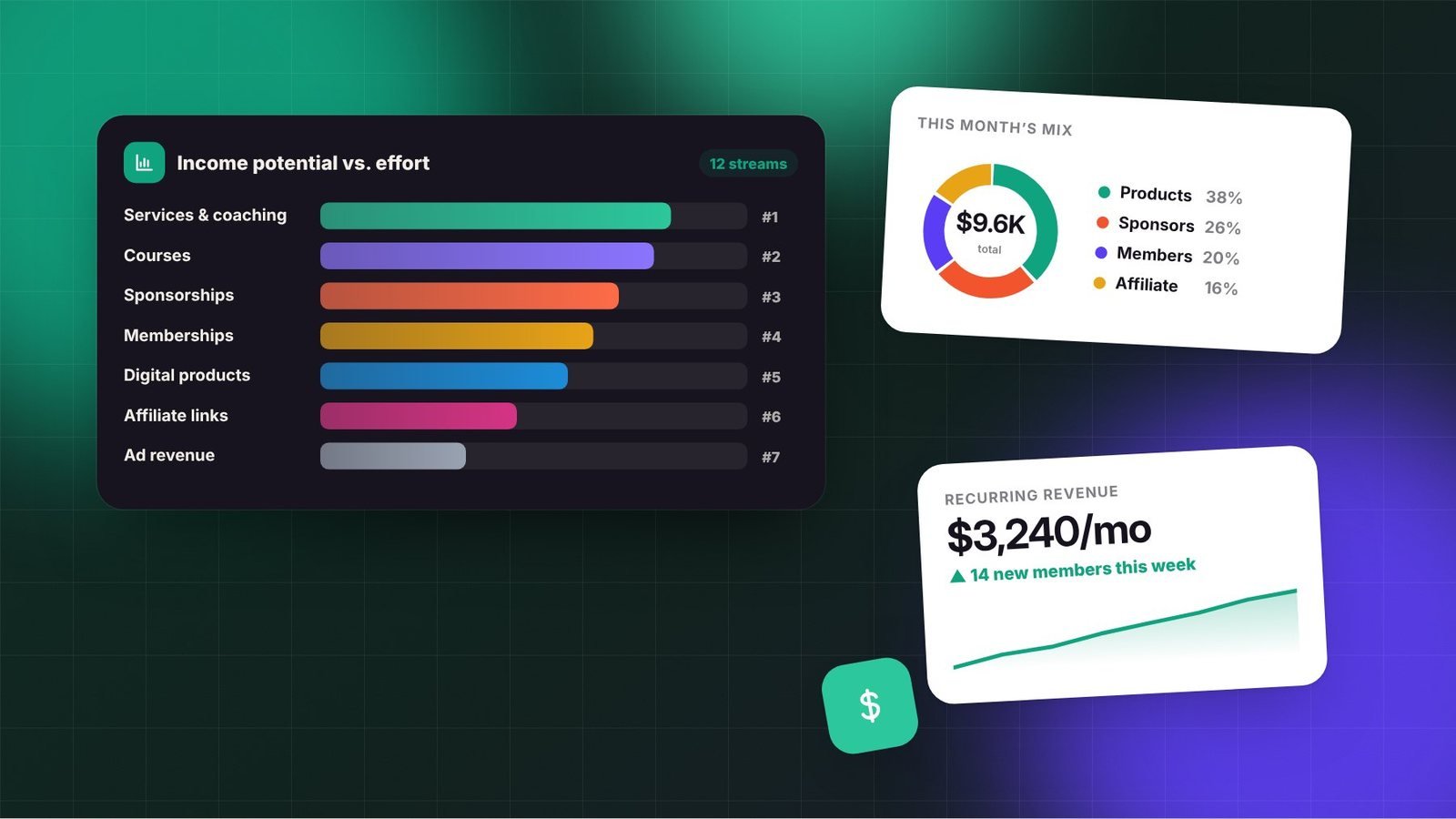
Relying on a single source of creator income is risky. Algorithms change, sponsors cut budgets, and platforms rewrite monetization rules. The most resilient creator businesses combine several revenue streams, each matched to the size and needs of their audience.
Below, we rank 12 common creator revenue streams by the effort to get started, the audience size you typically need, and the income potential once established. Use it to decide what to add next, not to chase everything at once.
Key takeaways
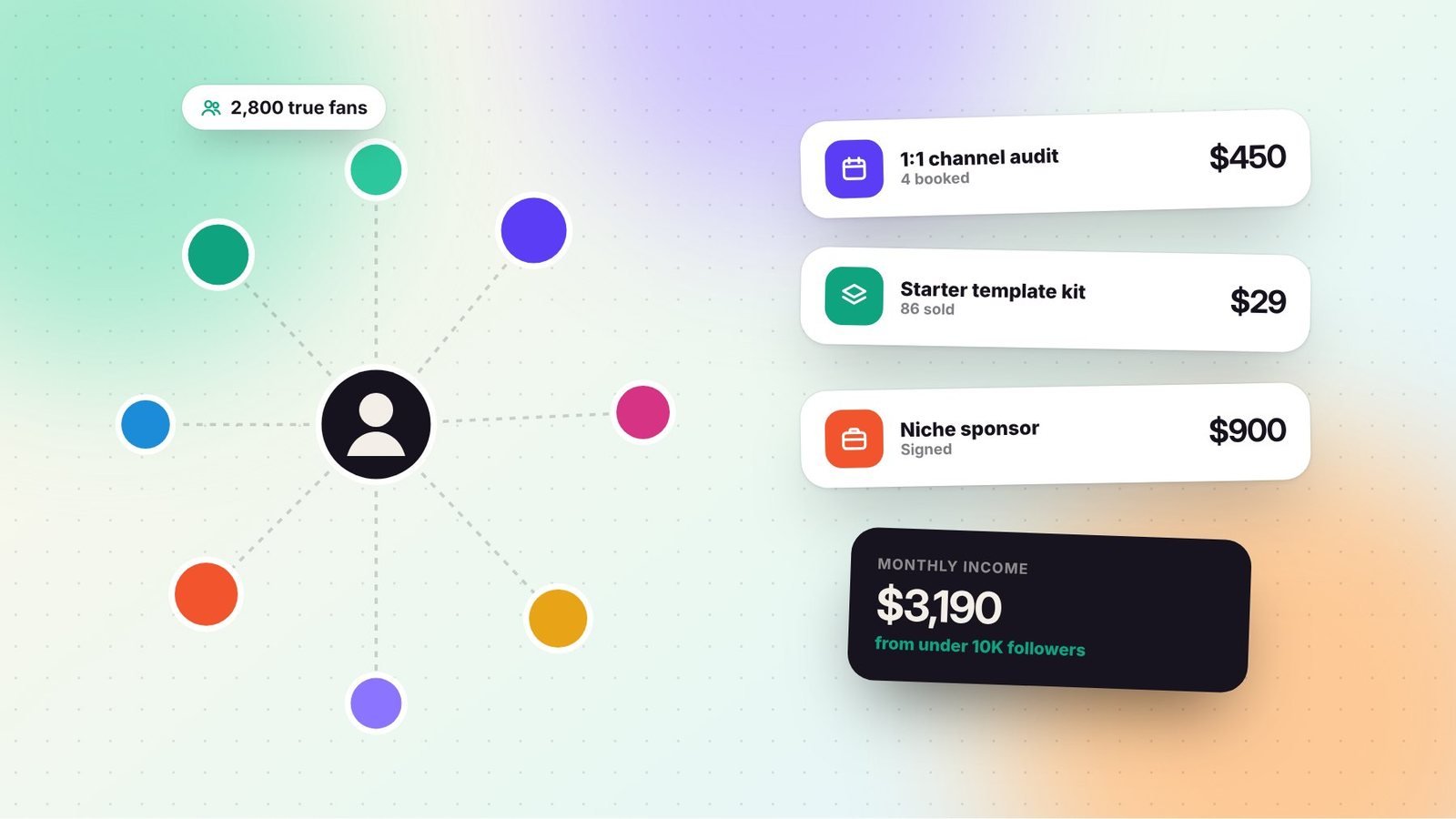
- Small audiences earn most from services, digital products, and affiliate links; ad revenue usually needs scale.
- Owned-audience income such as email and products is more stable than platform payouts.
- Add one revenue stream at a time and master it before adding another.
The ranking at a glance
| Revenue stream | Startup effort | Audience needed | Income potential |
|---|---|---|---|
| Freelance services or coaching | Low | Very small | Medium–High |
| Affiliate marketing | Low | Small | Low–High |
| Digital downloads (templates, guides) | Medium | Small | Medium |
| Brand sponsorships | Medium | Small–Medium | Medium–High |
| Paid newsletter | Medium | Medium | Medium |
| Memberships and communities | Medium–High | Medium | Medium–High |
| Online courses | High | Medium | High |
| Platform ad revenue | Low (once eligible) | Medium–Large | Low–High |
| Live tips, gifts, and badges | Low | Medium | Low–Medium |
| Physical merchandise | Medium | Large | Low–Medium |
| Speaking and workshops | Medium | Medium (niche authority) | Medium–High |
| Licensing and consulting for brands | Medium | Niche authority | High |
These are general patterns, not guarantees. Your niche matters enormously: a creator teaching software to businesses may earn more from 5,000 followers than an entertainment creator earns from 500,000.
Best streams for small audiences
1. Services and coaching
Selling your time is the fastest path to meaningful income because you only need a handful of clients. A designer with 2,000 engaged followers might book a few projects a month. The downside is that it doesn’t scale; your income is capped by your hours.
2. Affiliate marketing
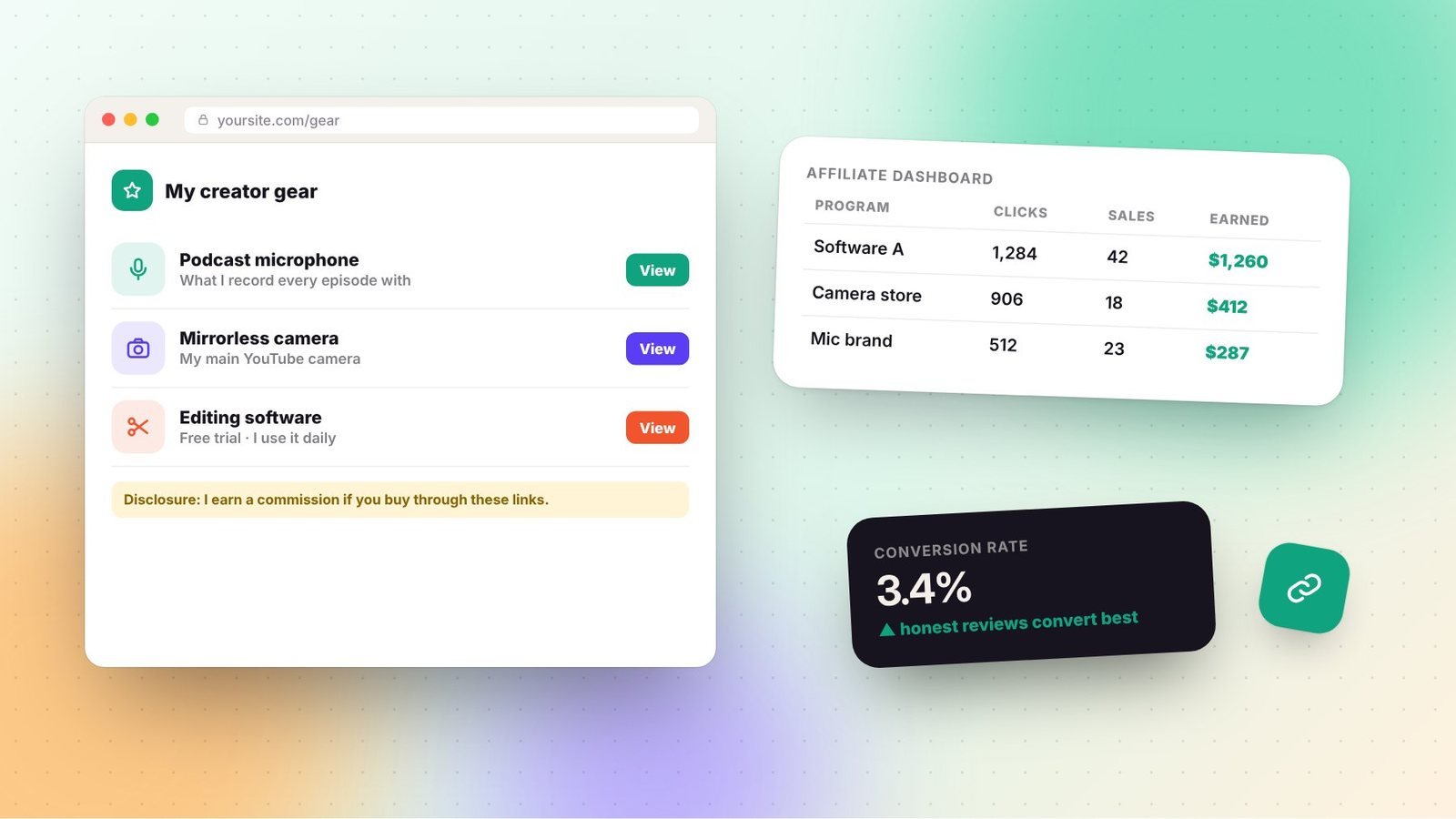
Recommend products you genuinely use and earn a commission when people buy. It’s easy to start, but income depends on trust and relevance. Our affiliate marketing guide for creators covers how to do it without eroding credibility, including required FTC disclosures.
3. Digital downloads
Templates, checklists, presets, and mini-guides solve one specific problem and can sell repeatedly with no extra work per sale. They’re a natural first product. See how to create and sell your first digital product in 30 days.
Streams that grow with your audience
4. Brand sponsorships
Brands increasingly work with smaller creators whose audiences are tightly focused and highly engaged. Rates depend on niche, format, and usage rights. Read our sponsored content pricing guide before quoting your first deal.
5. Paid newsletters and 6. Memberships
Recurring revenue is the holy grail of creator income because it smooths out the ups and downs. Paid newsletters work well for analysis, news, and expertise. Memberships and communities work when members value access, accountability, or connection with each other. Retention is everything; a membership that loses members as fast as it gains them won’t grow.
7. Online courses
Courses can produce significant revenue per launch, especially for skills tied to careers or income. They require real effort to build, support, and market, and quality matters because refund requests and reviews follow fast.
Streams that usually require scale
8. Platform ad revenue
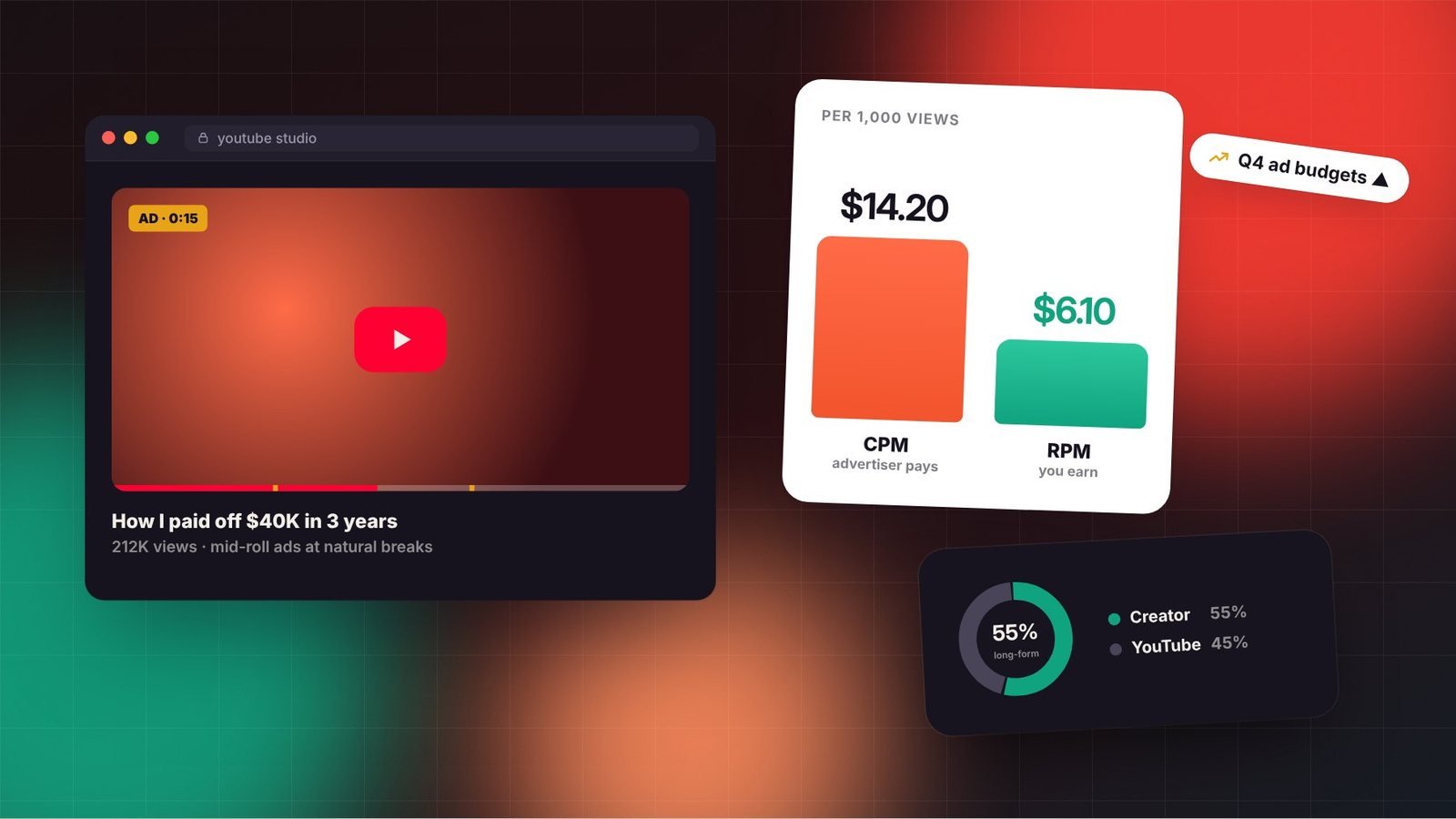
Ad revenue sharing, such as the YouTube Partner Program, pays based on views and advertiser demand. It’s passive once you qualify, but income varies widely by niche and season. Learn the details in how YouTube ad revenue really works.
9. Live gifts and tips
Livestream gifts, Super Chats, and tipping features reward creators with highly engaged live audiences. They’re best treated as supplementary income.
10. Merchandise
Merch works best when your audience strongly identifies with your brand, such as through inside jokes, a community name, or a recognizable aesthetic. Print-on-demand lowers the risk, but margins are thinner.
Authority-based income
11. Speaking and workshops and 12. Consulting and licensing
As your expertise becomes known, companies may pay you to speak, train their teams, consult on creator strategy, or license your content. These opportunities often come from being highly visible in a specific niche rather than from large follower counts.
How to choose your next revenue stream
- Ask your audience. What do they repeatedly ask you for? That’s your product or service hint.
- Match the stream to your stage. Under 10,000 followers, focus on services, affiliates, and a simple digital product.
- Prioritize owned audience. Building an email list makes every other revenue stream easier. Start with our guide on how to start a newsletter.
- Add one at a time. Give each new stream at least three to six months before judging it.
A sample revenue mix over time
Many creators follow a progression like this: they start with services or freelance work for immediate income, add affiliate links and a low-priced digital product, then layer on sponsorships as their audience grows, and eventually build a course or membership for recurring revenue. Ad revenue and merchandise become meaningful later, if at all.
There’s no single correct path. The goal is a mix where losing any one income source would hurt but wouldn’t sink you.
Frequently asked questions
How many revenue streams should a creator have?
There’s no fixed number, but many established creators rely on three to five meaningful streams. Starting with one or two and mastering them is better than launching many at once and doing each poorly.
Which revenue stream is the most stable?
Recurring revenue from memberships, paid newsletters, or subscriptions tends to be the most predictable. Income tied to an audience you own, such as an email list, is generally more stable than income that depends on platform algorithms.
Do I need a big audience to earn sponsorships?
Not necessarily. Many brands work with smaller creators whose audiences closely match their customers. A focused, engaged audience in a valuable niche can attract sponsors well before you reach large follower counts.