How YouTube Ad Revenue Really Works: RPM, CPM, and What Moves the Needle
Understand YouTube Partner Program eligibility, CPM vs. RPM, revenue sharing for long-form and Shorts, and the factors that change how much creators earn per view.
“How much does YouTube pay per view?” is one of the most searched creator questions, and there’s no single answer. Two channels with the same views can earn very different amounts depending on their audience, niche, video length, and time of year. Understanding how YouTube ad revenue works helps you set realistic expectations and make smarter content decisions.
Key takeaways
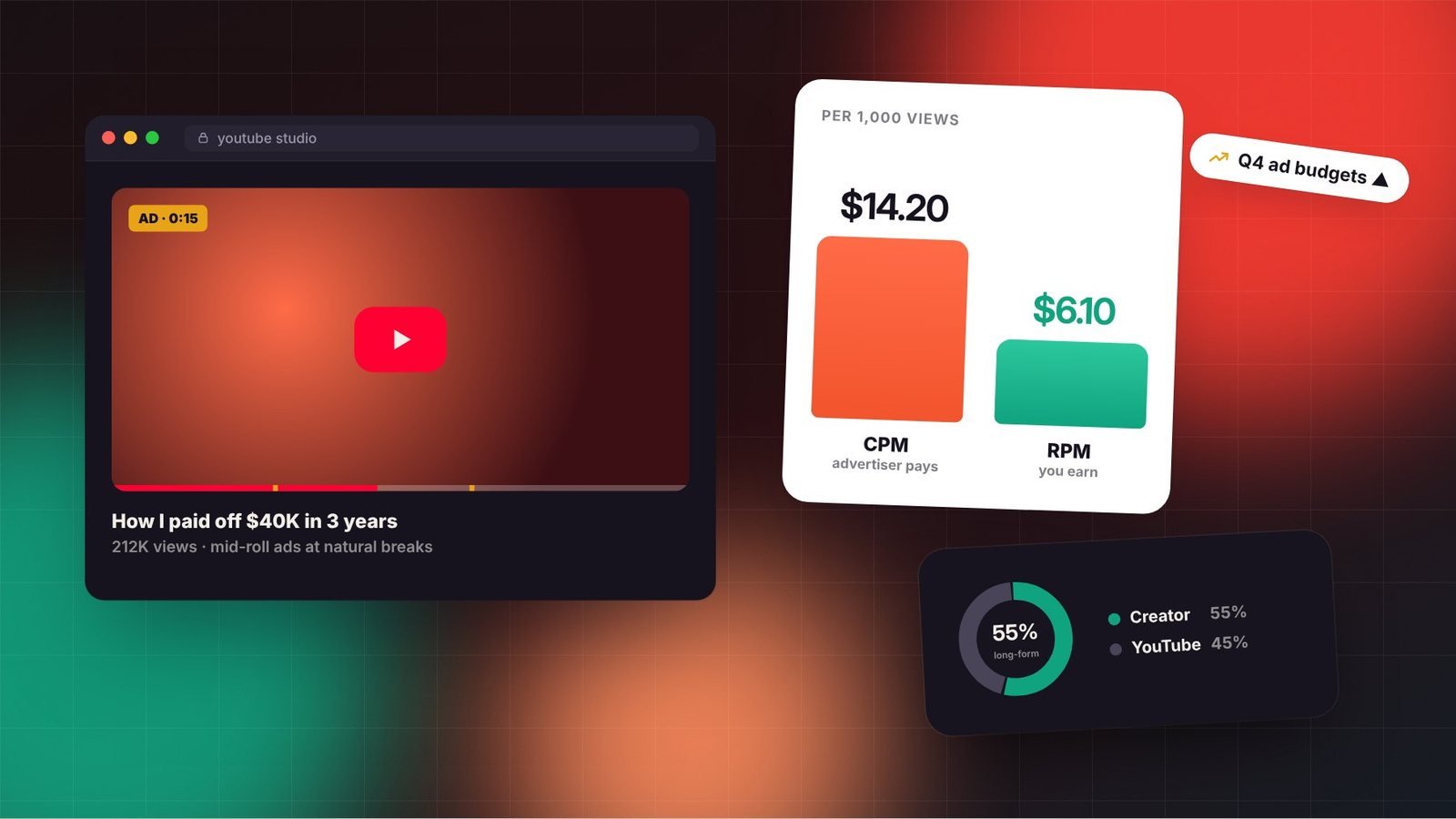
- CPM is what advertisers pay per 1,000 ad impressions; RPM is what you earn per 1,000 views after YouTube’s share and including all revenue sources.
- Long-form creators receive 55% of ad revenue from their videos; Shorts revenue is pooled and creators receive 45% of their allocated share.
- Niche, audience location, video length, and seasonality drive the biggest differences in earnings.
Getting into the YouTube Partner Program
To earn ad revenue, you must join the YouTube Partner Program (YPP). YouTube currently offers two levels of access. Expanded eligibility opens certain fan-funding and shopping features with 500 subscribers, three public uploads in the last 90 days, and either 3,000 public watch hours in the last 12 months or 3 million public Shorts views in the last 90 days. Ad revenue sharing requires 1,000 subscribers and either 4,000 public watch hours in the last 12 months or 10 million public Shorts views in the last 90 days.
You also need to follow YouTube’s monetization policies, have no active Community Guidelines strikes, turn on two-step verification, live in an eligible region, and link an AdSense account for payments. Requirements can change, so confirm the current details in YouTube’s official Help Center.
CPM vs. RPM: the difference that matters
CPM (cost per mille) is how much advertisers pay for 1,000 ad impressions on your videos, before YouTube takes its share. It only counts views where ads actually ran.
RPM (revenue per mille) is how much you earn per 1,000 views, after YouTube’s share, counting every view (including views with no ads) and including other YouTube revenue such as memberships, Super Chats, and YouTube Premium revenue.
RPM is almost always lower than CPM, and it’s the more useful number for planning because it reflects what lands in your account.
Revenue sharing
| Format | How revenue is shared |
|---|---|
| Long-form videos | Creators receive 55% of net ad revenue from ads shown on their videos. |
| Shorts | Ad revenue from the Shorts feed is pooled; after music licensing costs, creators receive 45% of the share allocated based on their portion of eligible views. |
| YouTube Premium | Creators earn a share of Premium subscription revenue based on how much Premium members watch their content. |
Because the Shorts model pools revenue and is based on far more views, Shorts typically earn much less per view than long-form content.
What drives your earnings
1. Your niche
Advertisers pay more to reach viewers who are likely to make valuable purchases. Topics like personal finance, business software, and insurance typically attract higher ad rates than broad entertainment or gaming, because the products advertised are more expensive.
2. Audience location
Ad prices vary significantly by country. Audiences in the United States, Canada, the United Kingdom, Australia, and parts of Western Europe generally command higher rates than many other markets.
3. Video length and ad placement
Videos longer than eight minutes can include mid-roll ads, which can increase revenue per view. Place mid-rolls at natural breaks rather than mid-sentence; badly placed ads hurt retention, which hurts long-term reach.
4. Seasonality
Ad budgets usually rise toward the end of the year, peaking during the holiday shopping season, and often dip in January. It’s normal to see RPM swing noticeably from month to month.
5. Advertiser-friendliness
Videos with profanity, sensitive topics, or controversial content may receive limited or no ads. Review YouTube’s advertiser-friendly content guidelines if you notice yellow monetization icons.
How to estimate your income
Use your own RPM, found in YouTube Studio analytics, rather than numbers you see online. The formula is simple:
Estimated monthly revenue = (monthly views ÷ 1,000) × your RPM
For example, if a channel earns an illustrative RPM of $6 and gets 200,000 views in a month, it would earn about $1,200 from YouTube that month. Your RPM could be much higher or lower depending on the factors above.
Ways to increase YouTube revenue
- Make videos people watch longer. Strong retention leads to more recommendations and more ad opportunities.
- Cover topics with commercial intent where it fits your niche, such as tutorials, reviews, and comparisons.
- Use mid-roll ads thoughtfully on longer videos.
- Turn on other YouTube features such as channel memberships, Super Thanks, and shopping where eligible.
- Diversify. Ad revenue is often the smallest slice of a successful creator’s income. Sponsorships, affiliate links, and products usually earn more per viewer.
Taxes on AdSense income
YouTube earnings are self-employment income in the US. Make sure your tax information is complete in AdSense, set aside money for taxes, and consider quarterly estimated payments. Our guide to taxes for content creators explains the basics.
Ad revenue is a great foundation, but rarely the whole house. Understand your RPM, focus on content that viewers truly value, and build additional revenue streams on top.
Frequently asked questions
Why is my RPM lower than my CPM?
CPM measures what advertisers pay per 1,000 ad impressions before YouTube’s share, and it only counts monetized views. RPM measures what you earn per 1,000 total views after YouTube’s share, including views without ads, so it’s naturally lower.
Do Shorts pay as much as long videos?
Typically not. Shorts revenue is pooled across the Shorts feed and shared based on views after music costs, and Shorts generate far more views per minute watched. Most creators earn much less per view from Shorts than from long-form videos.
Does putting more ads in a video always increase revenue?
Not always. Too many poorly placed ads can lower retention, which can reduce recommendations and long-term views. Place mid-roll ads at natural breaks and prioritize the viewer experience.