Taxes for Content Creators: A US Guide to 1099s, Deductions, and Quarterly Payments
A plain-English US tax guide for creators: self-employment tax, 1099 forms, common deductions, quarterly estimated payments, and record-keeping habits.
Creator income feels different from a paycheck, and so do creator taxes. No employer is withholding taxes from your brand deals, ad revenue, or product sales. That means you’re responsible for setting money aside, paying estimated taxes, and keeping records. Getting this right early prevents stressful surprises and penalties.
This guide is general education for US creators and isn’t tax advice. Tax rules change and individual situations vary, so work with a CPA or enrolled agent, and check IRS.gov for current figures.
Key takeaways
- Creator income is generally self-employment income subject to income tax and self-employment tax.
- All income is taxable, whether or not you receive a 1099 form.
- Pay quarterly estimated taxes and set aside a portion of every payment.
How creator income is taxed
If you’re a sole proprietor or single-member LLC, you report creator income and expenses on Schedule C. Your profit (income minus deductible expenses) is subject to:
- Federal income tax at your regular tax rates.
- Self-employment tax, which covers Social Security and Medicare. The combined rate is 15.3% on most net self-employment earnings (12.4% for Social Security up to an annual wage limit, plus 2.9% for Medicare). You can deduct half of it when calculating income tax.
- State and local income taxes, depending on where you live.
Understanding 1099 forms
Businesses and platforms that pay you may send information returns:
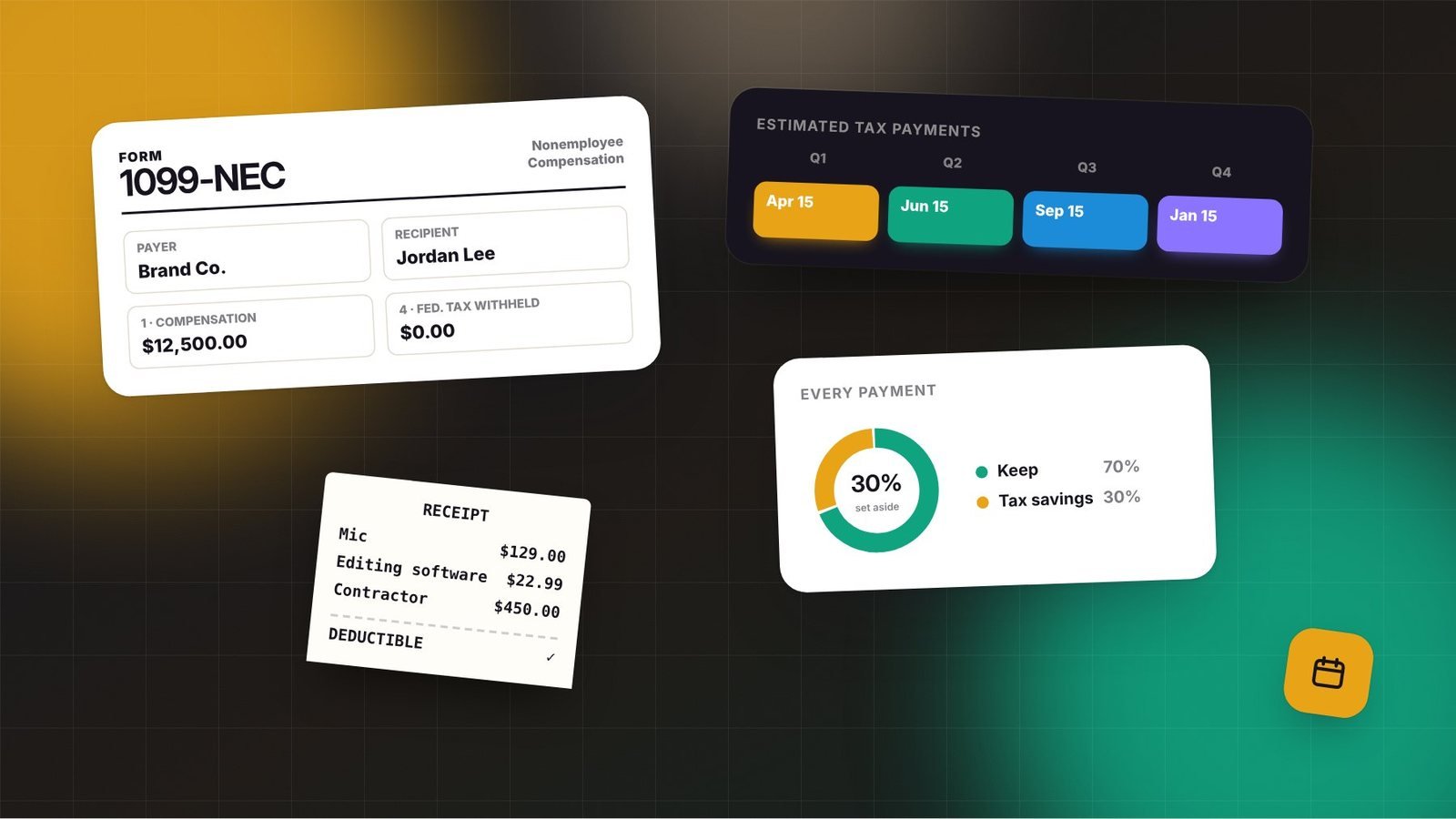
- Form 1099-NEC: from brands or clients that paid you for services. For payments made in 2026 and later, the reporting threshold rises from $600 to $2,000, with future adjustments for inflation.
- Form 1099-K: from payment platforms and marketplaces. Federal law sets the threshold at more than $20,000 in payments and more than 200 transactions in a year, though some states use lower thresholds.
- Form 1099-MISC: for certain other payments, such as some royalties or prizes.
Important: you must report all business income, even if you don’t receive a 1099. The forms are just how the IRS cross-checks what you report. Products you receive from brands in exchange for content may also count as income; ask your tax professional how to handle them.
Common deductions for creators
You can generally deduct expenses that are “ordinary and necessary” for your business. Common examples:
| Category | Examples |
|---|---|
| Equipment | Cameras, microphones, lights, computers (may be depreciated or expensed) |
| Software and subscriptions | Editing software, design tools, email platforms, music licensing |
| Contractors | Editors, designers, virtual assistants, thumbnail artists |
| Home office | A space used regularly and exclusively for business |
| Phone and internet | The business-use percentage |
| Professional services | Accountants, lawyers, business coaching |
| Marketing | Ads, website hosting, domain names |
| Education | Courses and books that improve skills for your current business |
| Travel | Business travel for shoots, conferences, or brand events |
Props, clothing, and personal items are tricky. Clothing generally isn’t deductible if it’s suitable for everyday wear, even if you wear it on camera. Keep business purpose notes for anything that could look personal.
The home office deduction has a simplified method (a flat rate per square foot, up to a limit) and a regular method based on actual expenses. Your space must be used regularly and exclusively for business.
Quarterly estimated taxes
Because nobody withholds taxes from your creator income, the IRS expects you to pay throughout the year using estimated payments, typically due in mid-April, mid-June, mid-September, and mid-January of the following year. Missing them can lead to underpayment penalties.
The IRS offers “safe harbor” rules: you generally avoid penalties if you pay at least 90% of this year’s tax, or 100% of last year’s total tax (110% if your prior-year adjusted gross income was above a certain level), through timely payments. You can pay online through IRS Direct Pay or your IRS online account. Many states also require estimated payments.
How much to set aside
Many creators move a fixed percentage of every payment into a separate savings account for taxes. A common starting point is 25%–30% of profit, but the right number depends on your income level, state, and deductions. Ask your tax professional to calculate a percentage for you after your first year.
Records to keep
- Income records from every platform, brand, and sales channel.
- Receipts and invoices for expenses.
- Bank and credit card statements for business accounts.
- Mileage logs if you drive for business.
- Contracts and W-9 forms.
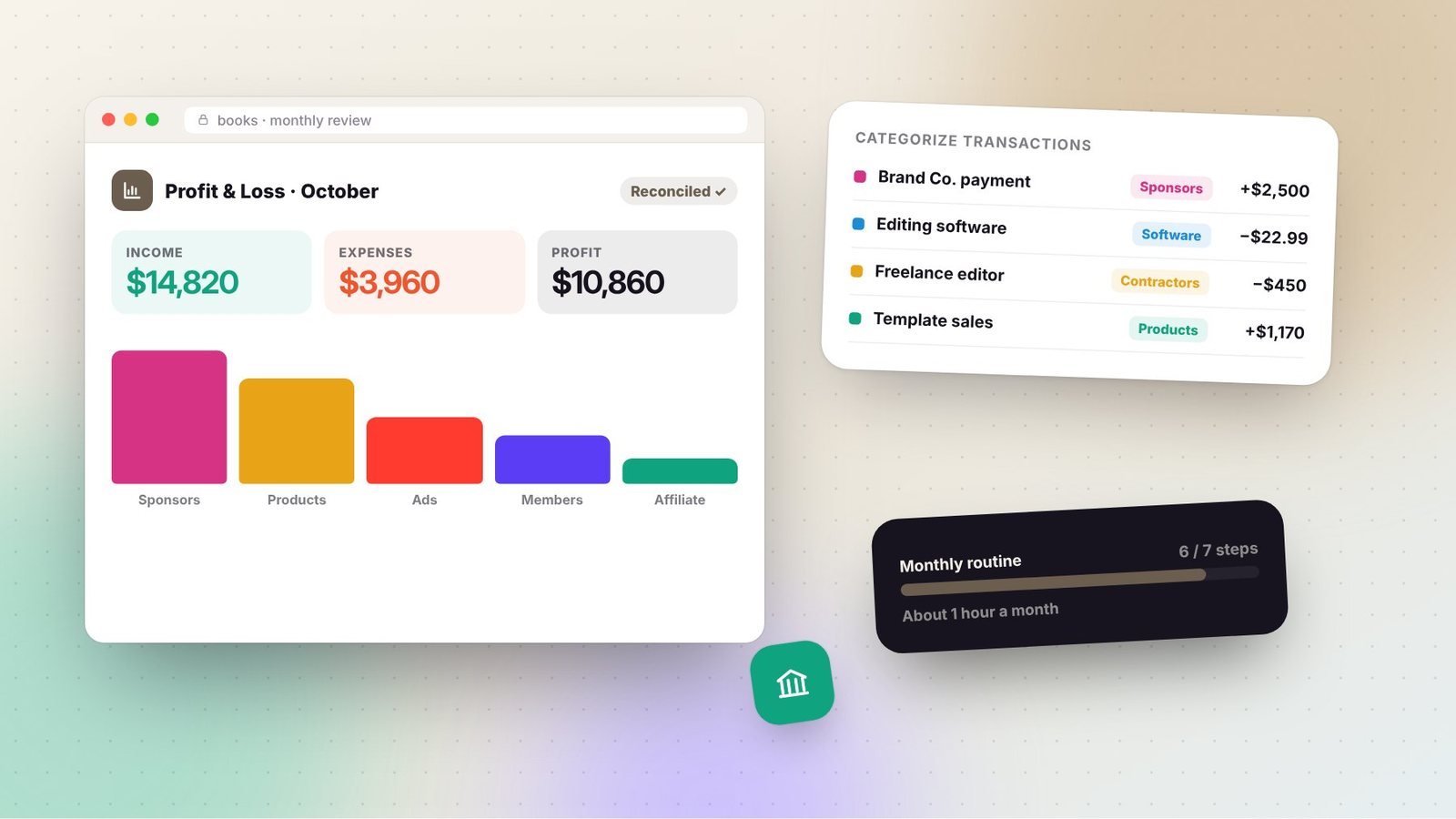
Keep records for at least three years, and longer for assets like equipment. Our bookkeeping guide shows how to stay organized in under an hour a month.
Other things to know
- Qualified Business Income deduction: many self-employed people may be eligible to deduct a portion of qualified business income, subject to limits.
- Retirement accounts: a SEP IRA or Solo 401(k) can lower your taxable income while saving for the future.
- Sales tax: selling physical or some digital products may require collecting sales tax in certain states; many marketplaces handle this for you.
- International platforms: some foreign platforms may ask for tax forms and could withhold tax on certain income; fill out tax information accurately in each platform’s dashboard.
Taxes are part of running a real business. With a separate bank account, a tax savings habit, and a good professional on your side, they become routine. If you’re considering an LLC or S corporation election, read should creators form an LLC.
Frequently asked questions
Do I need to report income if I didn’t get a 1099?
Yes. All business income is reportable, whether or not you receive a 1099. The forms help the IRS match income, but your obligation to report exists either way.
What happens if I miss a quarterly estimated payment?
You may owe an underpayment penalty, which is calculated based on how much and how late you paid. Making a payment as soon as possible reduces it. Safe harbor rules can help you avoid penalties.
Are gifted products taxable?
Products received in exchange for content may be considered taxable income. The rules can be nuanced, so keep a record of gifted items and their value and ask your tax professional how to report them.