Brand Deal Contracts: 10 Clauses to Read Before You Sign
Before signing a sponsorship agreement, check these 10 contract clauses: deliverables, payment terms, usage rights, exclusivity, approvals, morality clauses, and more.
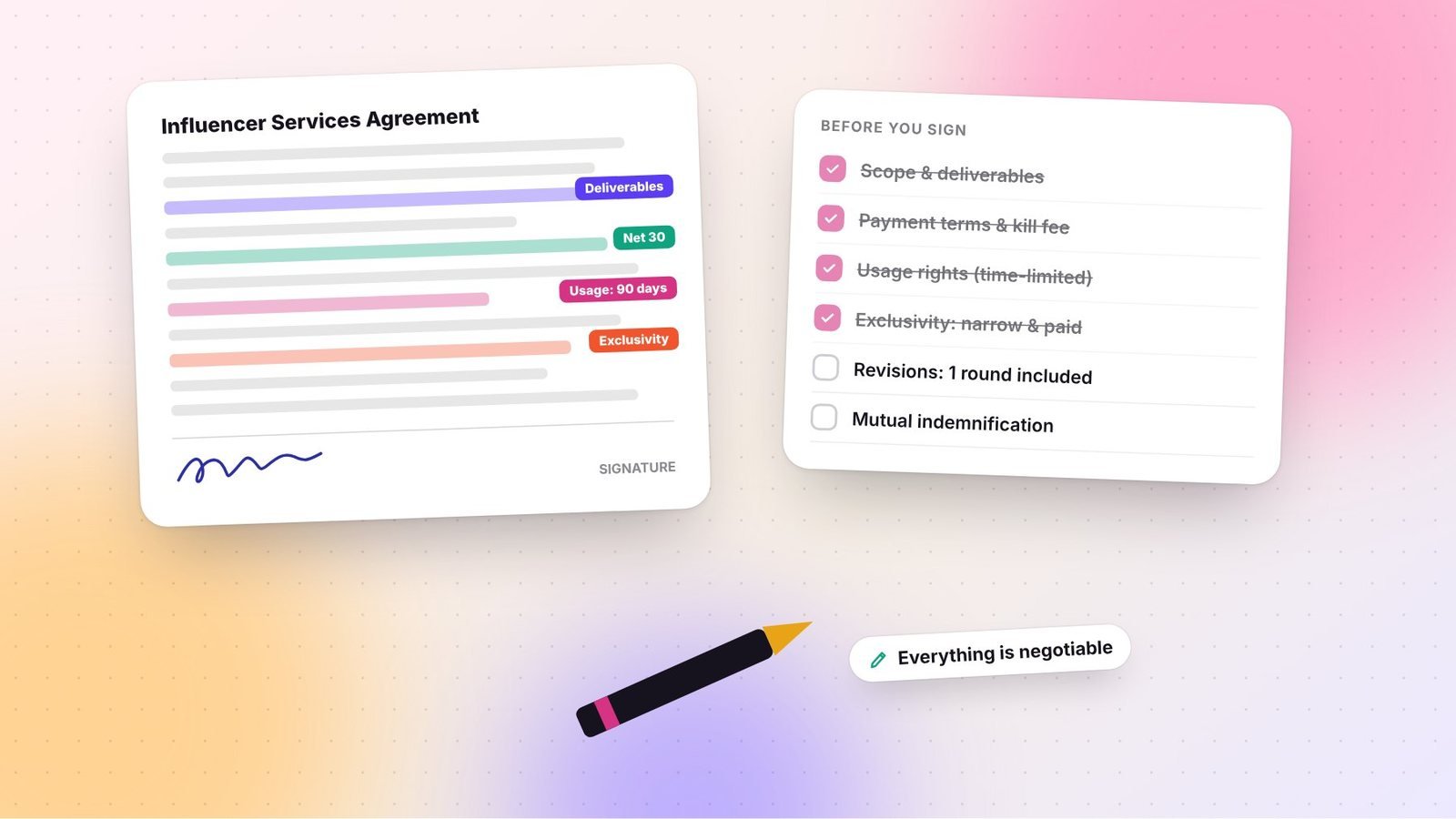
A brand deal contract protects both you and the brand by putting expectations in writing. But contracts are often written by the brand’s lawyers to favor the brand. Before you sign, read every clause and understand what you’re agreeing to. A few lines of fine print can mean giving away rights worth more than the fee itself.
This article is educational and not legal advice. For large or complex deals, have an attorney who works with creators review the agreement.
Key takeaways
- Every deliverable, deadline, and payment term should be specific and in writing.
- Usage rights, whitelisting, and exclusivity should be limited in scope and time, and priced.
- Everything is negotiable, including clauses labeled “standard.”
1. Scope of work and deliverables
The contract should list exactly what you’ll create: the number and type of posts, platforms, length, key messages, posting dates, and whether content must stay live for a minimum period. Vague language like “social media support” invites scope creep.
2. Payment terms
Check the amount, currency, payment method, and timing. “Net 30” means payment is due 30 days after invoicing or posting; some brands use Net 60 or longer. For larger deals, ask for a deposit upfront. Include a late payment clause if possible, and confirm what happens if the campaign is canceled after you’ve started work (a “kill fee”).
3. Content approval and revisions
Most brands want to review content before it goes live. Make sure the contract specifies how many revision rounds are included, how quickly the brand must give feedback, and what happens if feedback is late. Extra revisions should be billable.
4. Usage rights and licensing
This is one of the most important clauses. Usage rights define how the brand may reuse your content. Watch for:
- Where: brand social channels only, or also website, email, and paid ads?
- How long: 30 days, 90 days, a year, or “in perpetuity”?
- Edits: can the brand cut, modify, or combine your content?
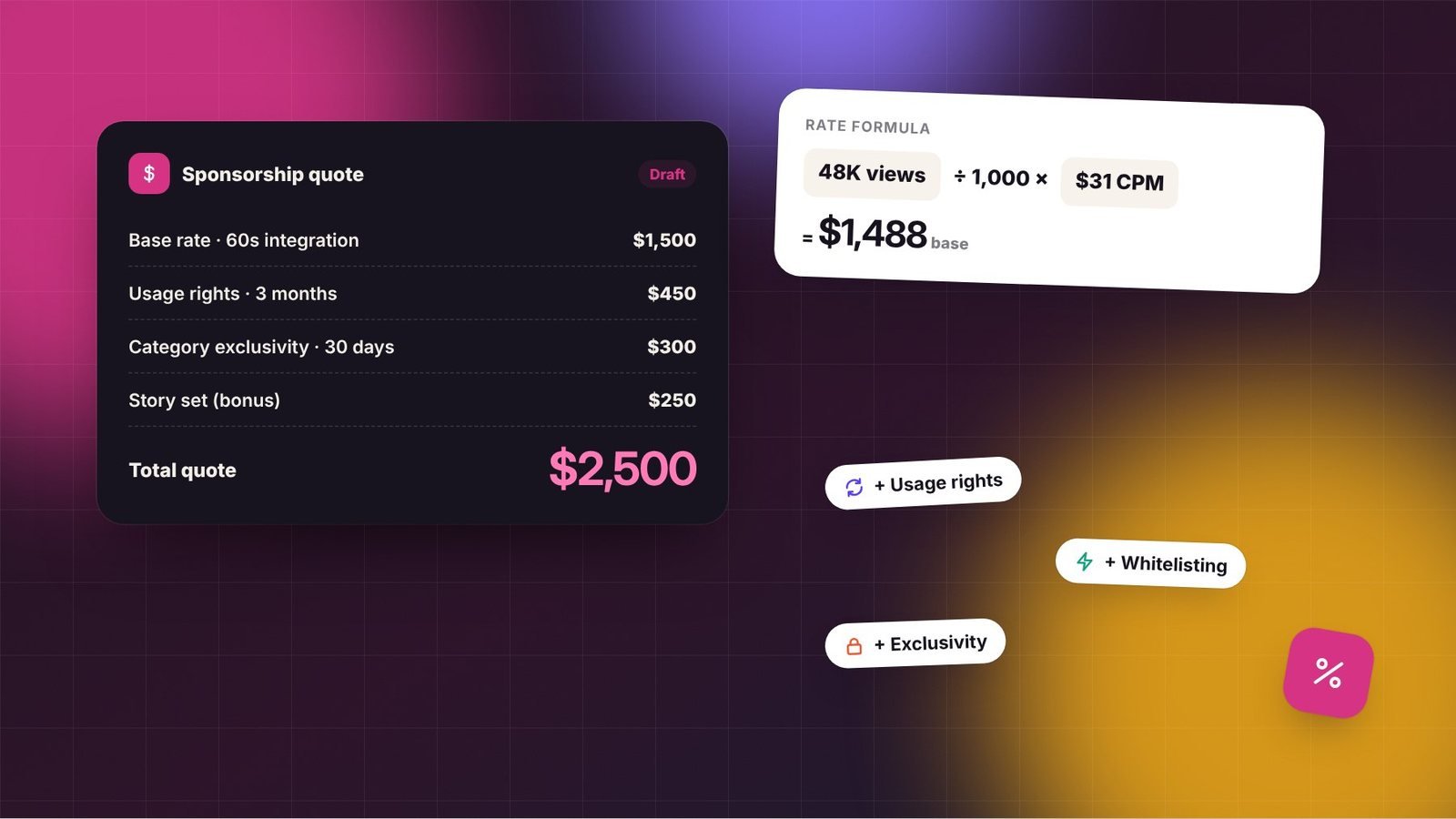
Avoid granting unlimited, perpetual rights for a standard fee. Paid ad usage and longer terms should cost more. See our pricing guide for how to charge for usage.
5. Ownership and intellectual property
Licensing is different from transferring ownership. Generally, you should keep ownership of your content and grant the brand a limited license. Be cautious of clauses that make your content “work made for hire” or assign all rights to the brand.
6. Exclusivity
Exclusivity clauses prevent you from working with competitors for a period. Make sure they are:
- Narrow: specific competitors or a specific product category, not an entire industry.
- Short: limited to a reasonable period around the campaign.
- Paid: you’re giving up income, so price it in.
7. Whitelisting and paid amplification
If the brand wants to run ads through your account (whitelisting, Spark Ads, partnership ads), the contract should specify duration, spend limits if relevant, your right to review ads, and additional fees. Your account is your reputation, so set clear limits.
8. Disclosure and compliance
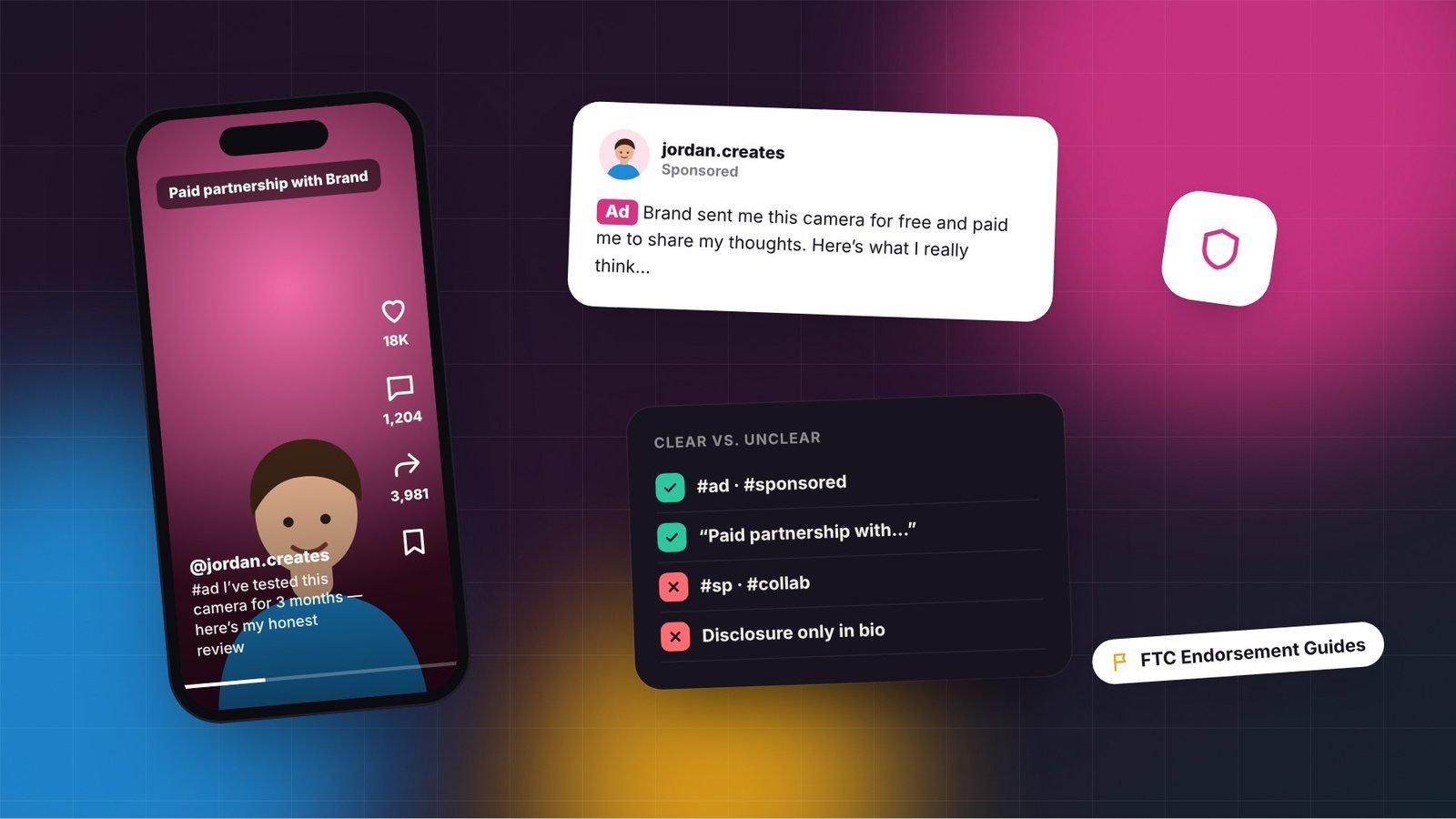
Expect a clause requiring FTC-compliant disclosures. That’s good; it protects you both. Make sure required claims and talking points are truthful and that you aren’t asked to say anything you can’t honestly support. Read our FTC disclosure guide.
9. Morality and termination clauses
Morality clauses let a brand end the deal if you do something that damages their reputation. Check how broadly “damaging conduct” is defined, and whether the clause is mutual (you should be able to exit if the brand faces a scandal). Termination clauses should explain how either party can end the deal and what payment you receive for work completed.
10. Indemnification and liability
Indemnification clauses decide who pays if something goes wrong, such as a legal claim. Watch for one-sided clauses where you’re responsible for issues outside your control, like claims about the brand’s product. Ask for mutual indemnification and reasonable limits on liability.
Other details worth checking
- Confidentiality: what you can and can’t share about the deal.
- Performance reporting: what analytics you must provide, and when.
- Governing law: which state’s laws apply.
- Product returns: whether you keep the product.
How to negotiate
- Read the whole contract and highlight anything unclear or concerning.
- Reply with specific requested changes and brief reasons.
- Offer alternatives: “I can offer 90 days of organic usage at this rate, or 12 months including paid ads for an additional fee.”
- Get final changes in writing before you start work.
Most brand managers expect some negotiation. Being professional and specific usually leads to a fair agreement and a better working relationship. If you’re setting up your business structure, also read whether creators should form an LLC.
Frequently asked questions
Do I need a lawyer for every brand deal?
Not necessarily. For routine deals with familiar terms, many creators review contracts themselves using a checklist. For large deals, long exclusivity, perpetual usage rights, or unusual terms, a lawyer’s review is worth the cost.
What is a kill fee?
A kill fee is payment you receive if a brand cancels a project after you’ve started work. It compensates you for time spent and opportunities you may have turned down.
Can I negotiate a brand’s standard contract?
Yes. Most brands expect some negotiation. Clearly explain the changes you need, especially around usage rights, exclusivity, payment terms, and revisions.