YouTube Shorts vs. TikTok vs. Instagram Reels: Where Should You Post in 2026?
Compare YouTube Shorts, TikTok, and Instagram Reels on discovery, audience, monetization, and long-term value to decide where your short-form videos belong.
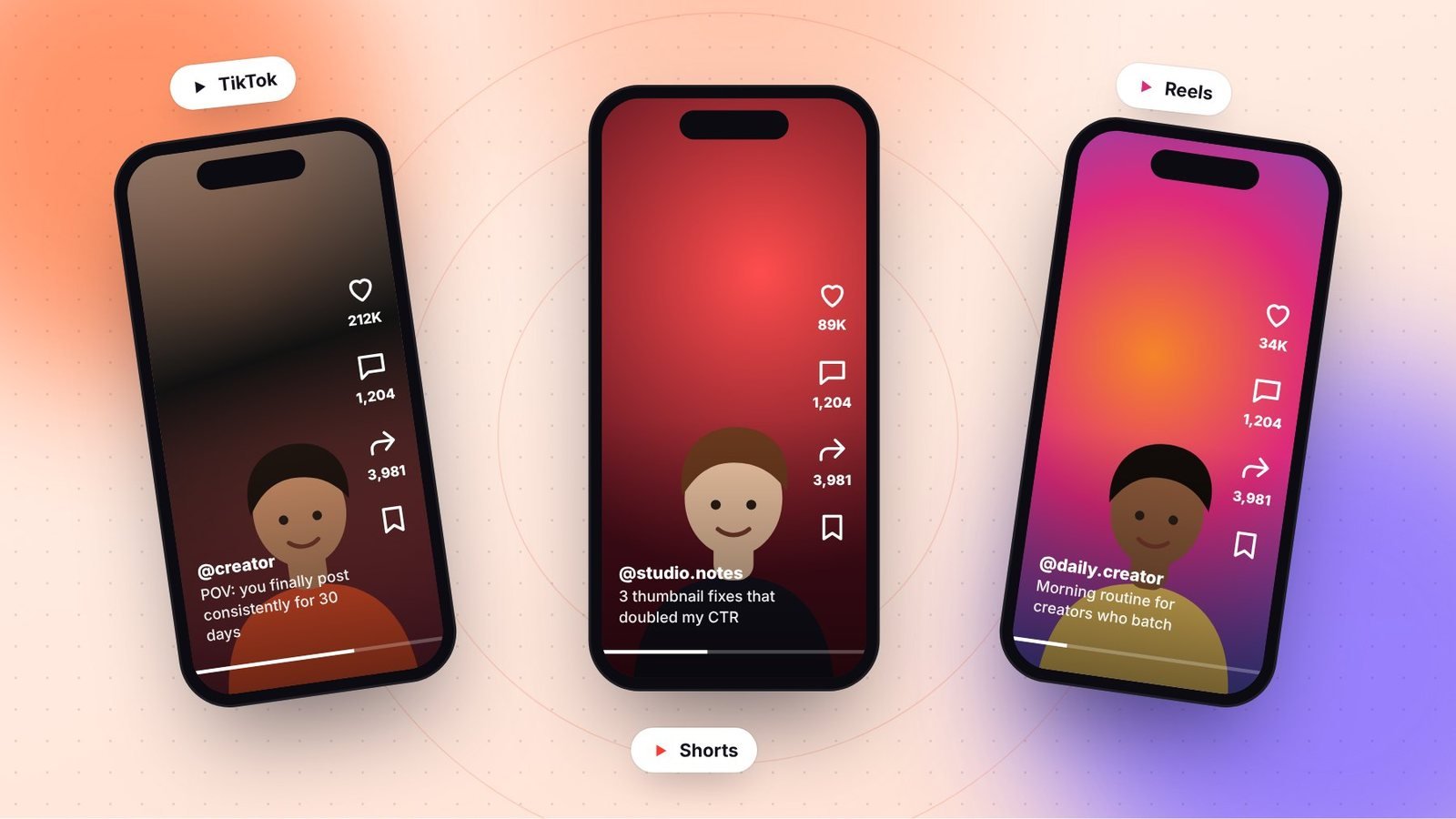
Short-form vertical video is still one of the fastest ways to reach new people online. But “post everywhere” isn’t a strategy, and each platform rewards different behavior. YouTube Shorts, TikTok, and Instagram Reels differ in how they recommend videos, who watches, how creators earn, and how easily viewers become long-term fans.
This guide compares the three on the factors that matter most for building a business, not just chasing views.
Key takeaways
- TikTok is often strongest for fast discovery and trends; Shorts is strongest for feeding a long-form YouTube channel; Reels is strongest for turning viewers into Instagram community and DMs.
- Cross-posting is fine, but upload natively and remove other platforms’ watermarks.
- Measure follows and downstream actions, not just views.
How each platform finds viewers
TikTok built its reputation on interest-based recommendations. A new account can reach a large audience if early viewers watch, rewatch, and share. That makes it attractive for experimentation, though reach can also be volatile from one post to the next.
YouTube Shorts lives inside the world’s largest video platform. Shorts can introduce new viewers to your channel, and YouTube connects your short and long-form content, so a viewer who discovers you through a Short may later watch your longer videos. Shorts also benefit from YouTube search, which gives some videos a longer tail than a typical social feed.
Instagram Reels blends recommendations with your existing social graph. Reels are shared heavily through DMs, and Instagram’s other features, such as Stories, Broadcast Channels, and close friends lists, make it easy to deepen relationships with people who discover you.
Side-by-side comparison
| Factor | TikTok | YouTube Shorts | Instagram Reels |
|---|---|---|---|
| Best for | Fast discovery, trends, testing ideas | Growing a YouTube channel, searchable evergreen clips | Community, DMs, lifestyle and visual brands |
| Path to long-form | Limited; most viewers stay on-platform | Strong; same channel as long videos | Moderate; Stories, Lives, and links |
| Native monetization | Creator programs, gifts, shop affiliate | Shorts ad revenue sharing via the YouTube Partner Program | Varies; bonuses come and go, subscriptions, gifts |
| Brand deal demand | High for consumer brands | Growing, often bundled with long-form | High, especially for beauty, fashion, travel, and food |
| Content shelf life | Usually short | Can be longer due to search | Usually short |
Program details and payouts change frequently on all three platforms, so always check each platform’s official creator help center for current requirements.
Monetization: what you can realistically expect
Direct payouts for short-form views are typically small compared with long-form video or other income streams. On YouTube, eligible Shorts creators share in a pool of ad revenue from the Shorts feed, with creators receiving 45% of their allocated portion after music licensing costs. Long-form videos, by contrast, pay creators 55% of ad revenue from their videos. You can read more in our explainer on how YouTube ad revenue really works.
For most creators, the real value of short-form is top-of-funnel growth: new followers, email subscribers, product sales, and brand deals. Treat platform payouts as a bonus rather than the business model.
Choosing your primary platform
Ask yourself three questions:
- Where does my business happen? If you sell courses or sponsorships tied to long YouTube videos, Shorts feeds that machine directly. If your business runs on DMs, coaching calls, or a visual brand, Reels may be more valuable.
- Where is my audience already? Look at where your existing followers and customers spend time, and where similar creators find traction.
- What can I sustain? One platform done consistently beats three done sporadically.
How to cross-post the smart way
Repurposing one video across all three platforms is efficient, but follow a few rules:
- Export clean files. Save a version without on-screen watermarks. Platforms may limit reach for videos visibly branded by a competitor.
- Use native features. Add on-platform text, captions, and sounds where possible, and write platform-specific captions.
- Adjust the hook. Viewers decide to stay within the first second or two. Test different openings on different platforms.
- Respect music rights. Licensed songs available in one app’s library may not be cleared for use elsewhere. Use royalty-free tracks or each platform’s licensed library when you post.
- Stagger posting. Posting on one platform first lets you learn from early results before posting elsewhere.
What to measure
Views are the easiest metric to watch and the least meaningful on their own. Track:
- Average percentage viewed and rewatches to judge content quality.
- Follows per 1,000 views to see whether people want more of you specifically.
- Profile visits and link clicks to measure interest in your offers.
- Downstream conversions, such as newsletter sign-ups or long-form views.
The bottom line
There’s no universally “best” short-form platform. If you’re building a YouTube business, start with Shorts. If you want fast feedback and broad consumer reach, TikTok is a strong testing ground. If your brand is visual and relationship-driven, Reels fits naturally. Pick one primary platform, repurpose to the others with light customization, and judge success by how many viewers become fans, subscribers, and customers.
Frequently asked questions
Should I post the same video on all three platforms?
You can, and many creators do. Upload natively to each platform, remove other apps’ watermarks, and adjust captions and hooks for each audience. Track results separately, because the same clip often performs very differently from one platform to the next.
How long should short-form videos be?
There’s no single ideal length. Short clips are easier to watch to the end, while longer short-form videos can work when they deliver steady value. Let your retention data guide you, and cut anything that doesn’t earn its place.
Can short-form video replace long-form content?
For some creators, yes, but most businesses benefit from at least one deeper format, such as long videos, a newsletter, or a podcast. Short-form is excellent for discovery, while deeper formats build trust and tend to drive more sales and higher-value sponsorships.