How to Hire Your First Editor or Virtual Assistant
Know when to hire, which role to hire first, how to write a job post, test candidates, pay contractors fairly, and onboard your first creator team member.
At some point, most growing creators hit a ceiling: there are only so many hours in a week. Hiring your first editor or virtual assistant can free you to focus on the work only you can do, like ideas, on-camera performance, and partnerships. But hiring badly can cost money, time, and stress.
This guide walks through when to hire, who to hire first, and how to set the relationship up for success.
Key takeaways
- Hire for the task that takes the most time and that someone else can do well.
- Document your process before you hire, and use a paid test project.
- Understand contractor vs. employee rules and collect proper tax forms.
Signs you’re ready to hire
- You consistently miss publishing goals because of production work.
- You spend many hours on tasks that don’t require your unique skills.
- You turn down opportunities because you lack time.
- Your income can support the cost, or the time saved would clearly let you earn more.
Editor or virtual assistant first?
Track your time for two weeks. The answer usually becomes obvious.
| Hire an editor first if… | Hire a VA first if… |
|---|---|
| Editing takes a large share of your week | Email, scheduling, and admin pile up |
| You publish long-form video regularly | You manage many brand inquiries and invoices |
| Your content would benefit from better pacing or graphics | You need help with research, uploads, or community management |
Other common first hires include thumbnail designers, short-form clip editors, and community moderators.
Step 1: Document your process
Before hiring, write down how you do the task: your editing style, preferred music sources, export settings, file naming, thumbnail rules, or how you sort emails. Record a short screen-share video walking through it. This becomes your training material and makes expectations clear.
Step 2: Write a clear job post
Include:
- A short description of your channel or business and audience.
- The specific tasks, volume, and turnaround time.
- Required skills and software.
- Pay structure and range.
- Examples of your content and style references.
- How to apply, including a portfolio and a specific detail to show they read the post.
Step 3: Find candidates
- Your own audience; fans often understand your style best.
- Creator-focused job boards and communities.
- Freelance marketplaces.
- Referrals from creator friends.
Step 4: Run a paid test
Shortlist a few candidates and pay each to complete a small, real task, such as editing a short segment or handling a sample inbox. Paying for tests is fair and attracts serious professionals. Evaluate quality, communication, attention to detail, and how well they followed instructions.
Step 5: Agree on pay and terms
Common structures include per-project rates (often used for editing), hourly rates (common for VAs), or monthly retainers for ongoing work. Put everything in a written agreement covering scope, deadlines, revisions, payment schedule, confidentiality, and who owns the work. For content you’ll publish, make sure the agreement clearly transfers ownership or grants you the rights you need.
Contractor or employee?
Most creators start with independent contractors. In the US, whether someone is a contractor or employee depends on the actual working relationship, including how much control you have over how, when, and where the work is done. Misclassification can lead to penalties. If you set fixed hours, provide equipment, and direct how tasks are done, the person may legally be an employee. Rules vary by state, so consult an accountant or employment attorney if you’re unsure.
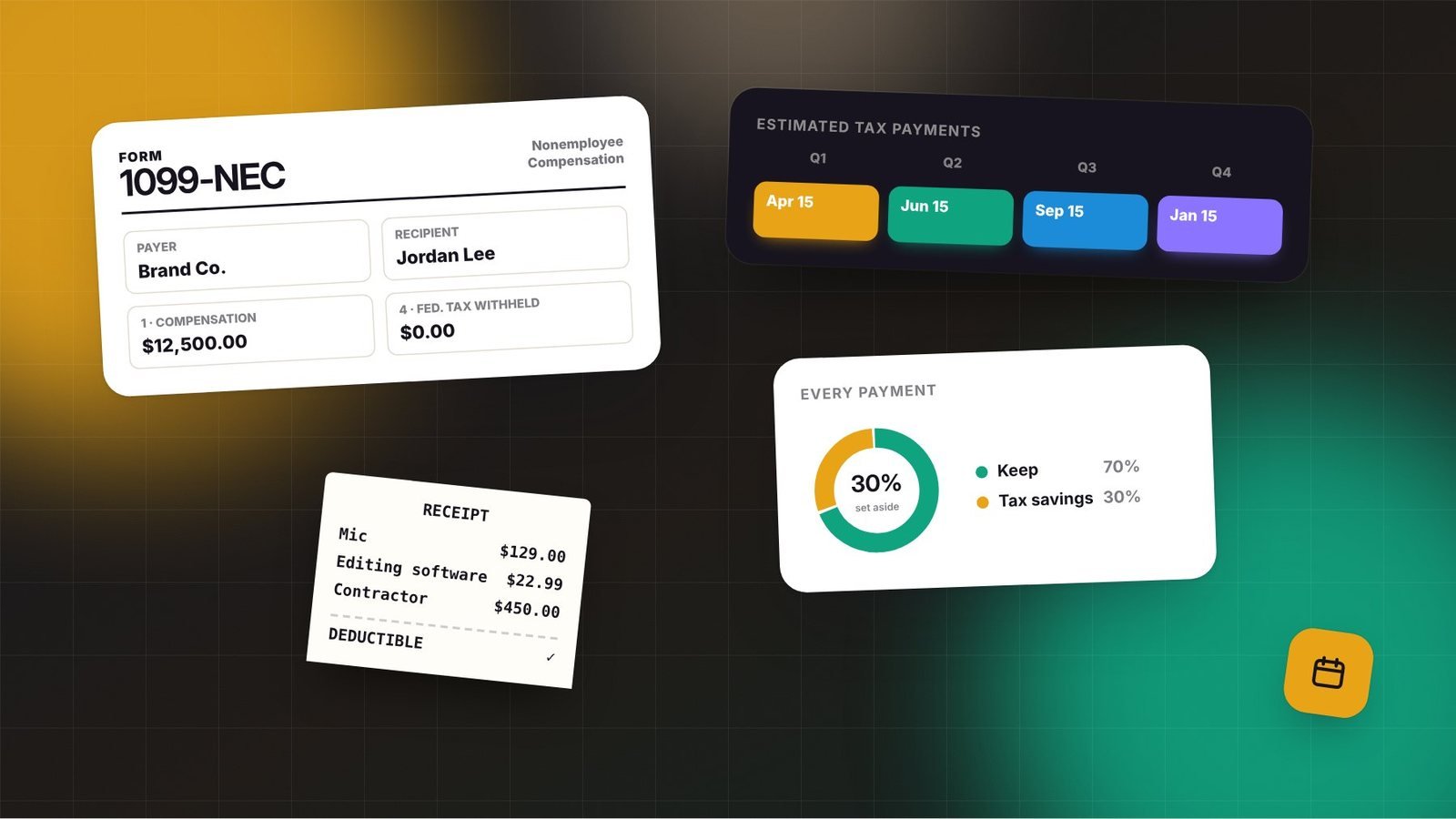
For US contractors, collect a Form W-9 before paying them and track payments; you may need to issue a Form 1099-NEC if you pay them above the IRS reporting threshold for the year. For international contractors, the paperwork is different; your accountant can advise.
Step 6: Onboard well
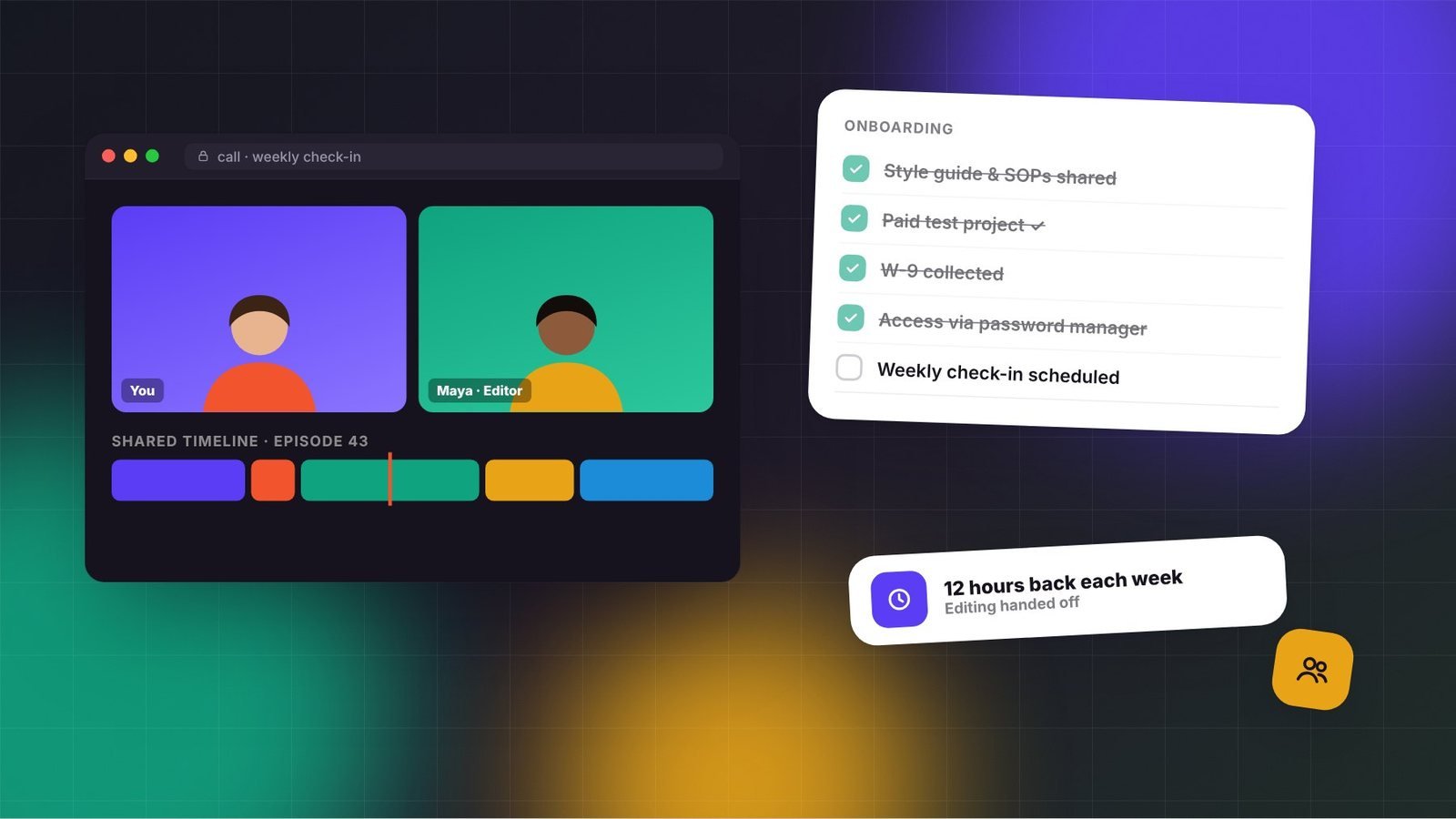
- Share your documented processes and style guide.
- Give secure access using a password manager and the minimum permissions needed; never share your main account password directly.
- Set up a shared project board and communication channel.
- Start with smaller tasks and give detailed feedback early.
- Schedule a weekly check-in for the first month.
Keep great people
- Pay on time, every time.
- Give specific, kind feedback and acknowledge good work.
- Offer growth, such as more responsibility, creative input, or raises as your business grows.
- Respect boundaries and agreed hours.
Your first hire is a big step from solo creator to business owner. Plan carefully, communicate clearly, and you’ll gain both time and a valuable collaborator. To streamline the work you hand off, pair your hire with our content batching system and creator automations guide.
Frequently asked questions
How much should I pay a video editor?
Rates vary by skill, experience, video length, and complexity. Many creators pay per video, while VAs are often paid hourly. Research current rates in creator communities and offer fair pay to attract reliable people.
Should I hire from my audience?
Fans often understand your style and community, which can be an advantage. Treat them like any candidate: use a paid test, a written agreement, and clear expectations.
How do I share account access safely?
Use a password manager with secure sharing, give the minimum permissions needed, and use platform roles where possible, such as YouTube channel permissions. Never share your primary password directly.